13-Day Multi-River Kayak Expedition in Nepal | Nepal River Runner

Multi River Kayak Expedition in Nepal

Starting Point

Starting Point Khadichour

Duration

Duration 13

Difficulty

Difficulty Class II to IV+ (kayak-rated)

Activity

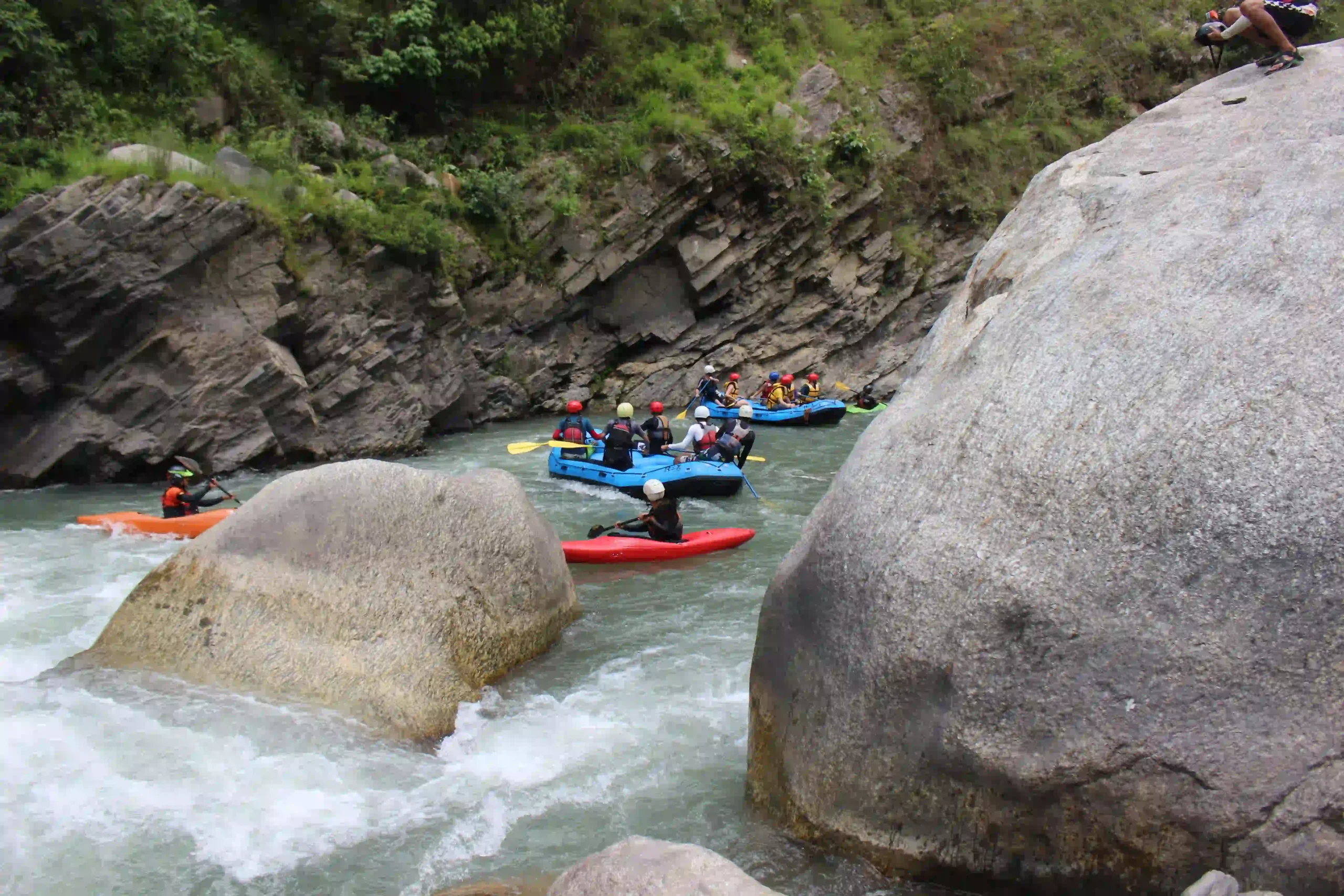
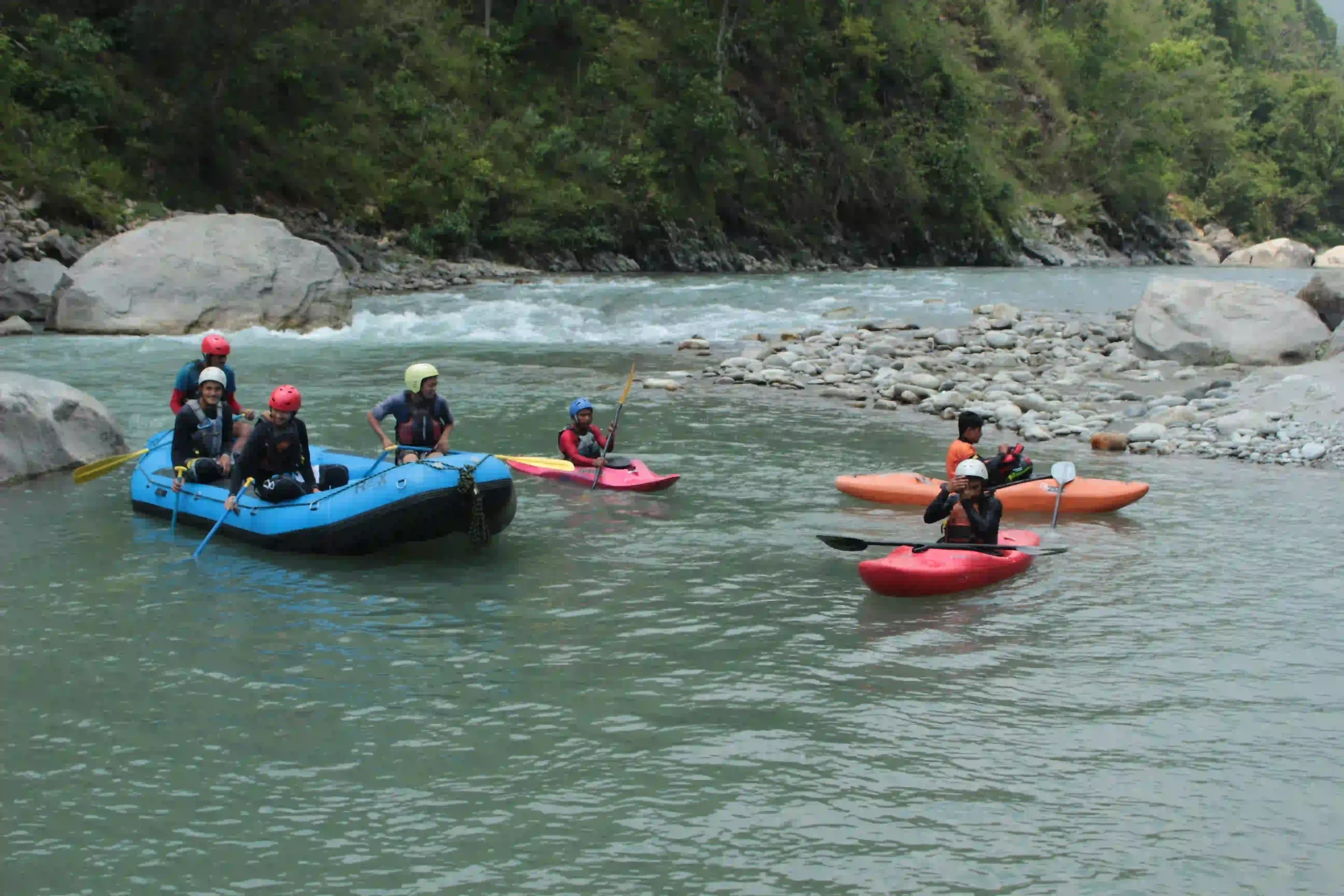
Activity Whitewater kayaking in individual kayaks, supported by safety kayakers and a support raft

Max. altitude

Max. altitude 1,272m

Best Season

Best Season March to June, September to December

Distance

Distance 336KM

Group Size

Group Size Minimum 1, Maximum 12

Ending Point

Ending Point Chatara

Overview of Multi River Kayak Expedition

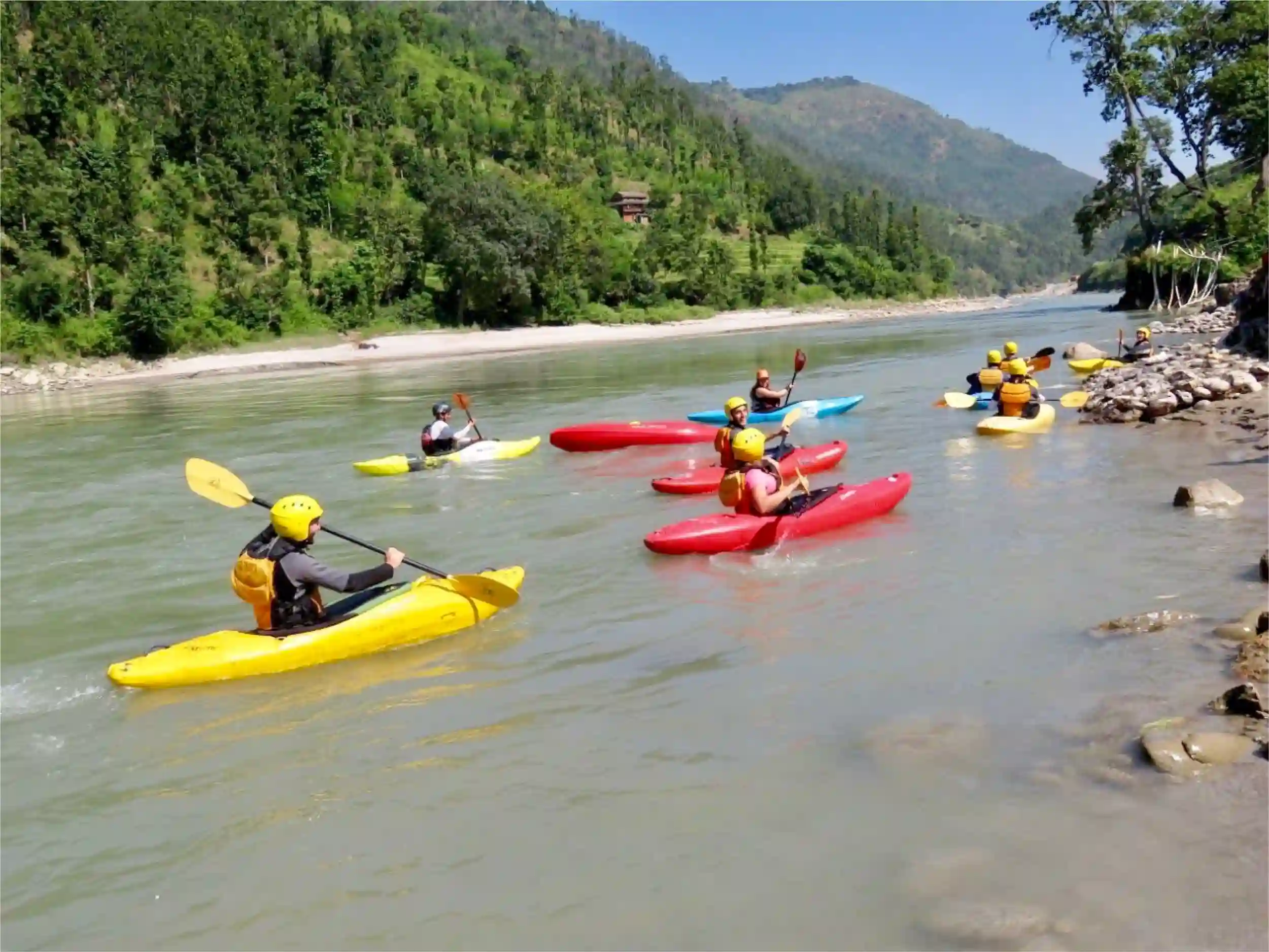
Thirteen days, four rivers, and 336 km of paddling make this our longest guided kayaking expedition from Kathmandu. It’s designed for paddlers who want more than a day or two on the water. You’ll start on the Lower Bhotekoshi at Khadichour, tackle the tighter, more technical rapids of the Balephi Khola, and spend several days running the Sun Koshi before transferring overland to Mulghat for the final section on the Tamur River. Known for its long stretches of whitewater, the Tamur brings a different challenge to the final part of the journey.

Between the rapids, you’ll pass terraced hillsides, riverside settlements, and Rai villages in eastern Nepal. You’ll also camp beside the rivers, with much of the route taking you through places that are difficult to reach by road.

Unlike rafting, where the crew works together to guide a raft through each rapid, kayaking puts you in charge of your own line. You’ll need to read the current, choose your route, make precise turns, and recover confidently if you capsize. Our safety kayakers and support raft provide backup throughout the expedition, allowing you to focus on your paddling while the team manages the wider safety plan.

Several rapids stand out along the route, including Meat Grinder, Judy, and High Anxiety on Day 5, Harkapur II on Day 6, and Ashram (Class IV+) on the Tamur on Day 12. You’ll also encounter the Gorge rapid on the Lower Bhotekoshi section, where you paddle into the entry waves below Anil Top before dropping into the rapid.

River conditions and features change over time. Landslides and seasonal shifts in the riverbed have altered parts of the Harkapur section, while the rock formation that gave Rhino Rock its name was swept away during the 2025 floods. The rapid has changed, but it still demands attention and careful line selection. Our Nepal government-licensed guides are IRF-certified and Whitewater Rescue Technician-trained, so they can assess the current conditions and adjust the plan to suit the river on the day.

Why Nepal Is One of the World’s Premier Kayaking Destinations

Nepal packs an impressive range of whitewater into a relatively accessible area. Rivers descend from the Himalaya and the Tibetan Plateau, creating everything from powerful wave trains on the Sun Koshi and Tamur to the tighter, more technical channels of the Balephi Khola. Many of these rivers are only a few hours’ drive from Kathmandu, making multi-day kayaking expeditions possible without a lengthy approach to the put-in.

For experienced paddlers, the appeal lies in the variety. You can spend one day navigating technical rapids and the next building a rhythm through long stretches of continuous whitewater. Multi-day trips also bring riverside camping, changing landscapes, and access to communities that most visitors never see.

The season matters, too. Spring brings snowmelt and rising water levels, while autumn generally offers clearer weather and more settled conditions after the monsoon. Together, these features make Nepal a strong destination for whitewater kayaking, especially for paddlers looking for a multi-river journey rather than a single-day run.

Multi-River Kayak Expedition Itinerary

Day 1: Kathmandu to Khadichour to Sukute

The drive from Kathmandu to Khadichour takes around three and a half hours. Here, you’ll reach the put-in for the Lower Bhotekoshi River. After a safety briefing and an on-water skills check, you’ll begin paddling through moderate Class III rapids, including Landslide and Anil Top/Gorge.

The first day covers around 16 km. The water has a strong current and a few small drops, but this opening section also gives you time to settle into your kayak before the harder days ahead. You’ll finish at Sukute (698 m), where the group camps beside the river.

Day 2: Sukute to Balephi Khola to Dolalghat

A drive of roughly two hours takes you to Jalbire (1,272 m), where you’ll begin the day’s kayaking. The route starts on the Sun Koshi with Class II–III rapids before you enter the narrower, more technical Balephi Khola.

Expect faster currents, boulder-filled channels, and Class III–IV rapids that require accurate lines and good boat control. The Balephi eventually leads back into calmer water near Dolalghat, where the Indrawati joins the Sun Koshi. You’ll spend the night camping on the river’s white-sand beaches.

Seasonal Note & River Conditions: The Balephi River is generally suitable for kayaking from the third week of October onward, although post-monsoon water levels can affect conditions. Our team will check river conditions first, and if the Balephi isn’t a good option, we’ll head to the Indrawati River instead, paddling from Sipaghat to Dolalghat through manageable Class II to II+ whitewater.

Whichever river we paddle, you’ll finish the day near Dolalghat, where you can relax and spend the night camping on the river’s white-sand beaches.

Day 3: Dolalghat to Pachuwarghat

At Dolalghat, the lower Bhotekoshi, also known as the upper Sun Koshi, meets the Indrawati, and the river continues as the Sun Koshi. The day begins with smoother water, giving you a chance to warm up before the first Class III rapids appear towards the end of the run.

This section is less technical than the Balephi Khola, but you’ll still need to paddle steadily and manage your energy. After reaching Pachuwarghat, you’ll set up camp and have time to relax around the campfire in the evening.

Day 4: Pachuwarghat to Chainpur

Today’s route combines Class II and III rapids with views of everyday life along the Sun Koshi. You’ll pass Kusheswor Temple, where the BP Highway briefly follows the river, and Majhee Gaun, a fishing village whose name translates to “fisher’s village.”

The current eases as you approach Chainpur. You’ll finish the day’s paddle and camp beside the Sun Koshi, ready for the longer stretches of whitewater ahead.

Day 5: Chainpur to Jhagare

Day 5 is one of the expedition’s standout paddling days. The Tama Koshi joins the Sun Koshi early in the run, increasing the river’s volume and setting the pace for a series of named Class III rapids.

You’ll navigate Meat Grinder, Punch, Judy, Pre-anxiety, and High Anxiety. The rapids come in quick succession, so you’ll need to read the water carefully, coordinate your movements, and maintain good boat control throughout the run.

After a full day on the river, you’ll reach Jhagare and set up camp.

Day 6: Jhagare to Raighat

The main challenge today is Harkapur II (Class IV), which comes shortly after the Dudh Koshi joins the Sun Koshi. This rapid can change with seasonal conditions and water levels, so the guide team will assess it on the day and decide how to proceed. Safety kayakers will position themselves according to the plan.

Beyond Harkapur, the river continues through forested hills and riverside settlements. You’ll finish at Raighat beach, where the group camps for the night.

Day 7: Raighat Rest Day

After several days of paddling, you’ll have a full day off the water. You can visit nearby villages, learn about the Rai community, or simply rest your shoulders and forearms.

There may also be time to swim in designated safe sections of the river, followed by a barbecue at camp in the evening. This break is an important part of a 13-day kayaking expedition, giving you time to recover before the next stretch of whitewater.

Day 8: Raighat to Rasuwaghat

You’ll return to the Sun Koshi for a day that includes Jaws (Class IV), the aptly named Dead Man Eddy, and the well-known rapid historically called Rhino Rock (Class IV).

Rhino Rock was named after a rock formation that resembled a rhino horn. The feature was swept away during the 2025 flood events, changing the rapid’s appearance and flow pattern. Older photographs may no longer reflect what you’ll see on the river. The rapid still has a strong current and technical moves, so your guide will explain the current line based on the water level.

After the day’s run, you’ll camp at Rasuwaghat.

Day 9: Rasuwaghat to Waterfall

The river narrows as you enter the section known as the Jungle Corridor. Steep banks, dense vegetation, and a series of rapids make this stretch feel different from the more open sections of the Sun Koshi.

You’ll alternate between fast-moving water and calmer stretches, with waterfalls adding to the scenery along the way. Once the day’s paddle is complete, you’ll camp near the waterfall beside the Sun Koshi.

Day 10: Waterfall to Tribeni

Today’s paddle includes calmer sections of river, along with two rapids worth watching for: Big Dipper and Black Hole.

At Tribeni, the Arun and Tamur join the Sun Koshi at the confluence of three rivers. From this point, the river is technically known as the Saptakoshi, meaning “seven rivers.” The channel widens, and the water volume increases as you approach the confluence.

You’ll camp at Tribeni for the night before the transfer to the Tamur section.

Day 11: Chatara to Mulghat

The day begins with a short paddle on the Sapta Koshi into Chatara, followed by an overland transfer to Mulghat, the put-in for the Tamur River section.

This transfer allows the expedition to include a fourth river system, bringing a different character to the final part of the journey. You’ll set up camp at Mulghat beside the Tamur.

Day 12: Mulghat to Tribeni

The Tamur delivers one of the expedition’s biggest days on the water, with roughly 30 rapids along the route. The main highlights include Ashram (Class IV+), Hell Hole (Class IV), and Bat Below (Class IV).

As the river widens into its lower section, the whitewater gradually eases. However, the larger volume and shifting channels still require you to read the current and choose your lines carefully. Compared with the more technical sections earlier in the day, this stretch puts more emphasis on rhythm and navigating the flow.

You’ll reach Tribeni for the final night of riverside camping, beside the Sun Koshi.

Day 13: Tribeni to Chatara, Then to Kathmandu

The final paddle takes you past Baraha Temple to Chatara, the expedition’s take-out. After lunch, you’ll begin the drive back to Kathmandu, which takes around 9–10 hours.

Alternative: You can drive to Biratnagar and fly to Kathmandu instead. This option is faster but costs extra and must be requested when booking.

What to Bring for the Multi River Kayaking Expedition

The right equipment makes a real difference on a 13-day whitewater kayaking trip. Your kayak needs to fit properly, and you should already be comfortable using your paddling and safety gear before arriving in Nepal.

On-Water Equipment

  • Whitewater kayak: Properly sized, with suitable flotation and outfitting. You can use a boat from our fleet or bring your own. See “Choosing the Right Kayak for This Expedition” below.
  • Paddle: Sized to suit your height and paddling technique.
  • Spraydeck: Compatible with both your kayak’s cockpit and your fit.
  • Whitewater PFD: Properly fitted for secure movement and flotation.
  • Whitewater helmet: Designed for paddling.
  • River footwear: Shoes or boots that provide secure footing and protect your feet.
  • Thermal protection: Neoprene, synthetic, or wool layers, plus a drytop or drysuit depending on the month. Avoid relying on cotton as your main insulating layer in cold or wet conditions.

Personal Camping Equipment

  • Sleeping bag and sleeping mat
  • Warm jacket or fleece
  • Quick-drying clothing
  • Camp footwear
  • Headlamp
  • Water bottle
  • Sunscreen and sunglasses
  • Personal medication
  • Small towel
  • Waterproof pouch for documents and valuables
  • Camera, batteries, and chargers
  • A little cash

Rescue and Safety Equipment

Technical rescue equipment, including throw bags, carabiners, webbing, pulleys, prusik systems, and rescue knives, forms part of the group’s overall river-safety setup. Each paddler does not necessarily need to carry all these items individually.

Before departure, confirm with us which safety items you need to bring yourself and which the team will provide.

Your exact equipment list will depend on the season and water levels. A December departure may require a heavier drysuit setup than a May trip. We’ll confirm the details once we know your travel dates and kayak requirements.

Choosing the Right Kayak for This Expedition

Choosing the right kayak is an important part of preparing for a trip of this length. We work with paddlers who use our fleet as well as those who prefer their own boats. It’s worth discussing your options before departure so we can arrange a kayak that suits your size, experience, and the rivers on the itinerary.

Creekboat vs. Half-Slice

For most paddlers, a creekboat is the practical choice for this expedition. The route includes four rivers with sustained Class III–IV(+) whitewater, so a boat with higher volume, noticeable rocker, and a hull designed to resurface predictably through drops and strong currents makes sense.

A half-slice can also work for experienced paddlers who want more active edge control and stern engagement. However, it offers less of the forgiveness that a creekboat provides, so you’ll need to be comfortable with the trade-off.

A playboat isn’t suited to this itinerary. It’s designed around freestyle features rather than the demands of multi-day expedition river-running.

Our Kayak Fleet

Our fleet includes models such as the Dagger Nomad, Pyranha, Jackson Karma, and Bliss-Stick Mystic, along with other boats depending on availability.

The kayak is included in the trip price. If your preferred model or size isn’t available from our own fleet, we’ll arrange a boat through a partner outfitter where possible. There is no separate kayak rental charge for the boat provided as part of the package.

If you already use a particular creekboat at home, tell us the model and size when you enquire. This gives us a useful starting point for checking availability for your departure.

Kayak Sizing

Manufacturer weight ranges are a useful starting point, but they don’t tell the whole story. Your height, inseam, and shoe size also affect how a kayak fits and handles.

The cockpit should provide secure contact at the thigh braces, hip pads, backband, footrest, and seat without pinching your knees, hips, or feet.

If you’re unsure which boat would suit you, send us the following details:

  • Height and weight
  • Inseam and shoe size
  • Whitewater kayaking experience
  • Experience rolling in moving water
  • Preferred kayak type, if you have one

We’ll use this information to recommend a suitable option from the available fleet rather than choosing a boat based on its model name alone.

Bringing Your Own Kayak

You’re welcome to bring a kayak you’re already comfortable paddling. Let us know the model and size in advance so we can plan the transport and other logistics.

Before booking your flight, consider the airline’s rules for transporting kayaks, transfers between the airport and the put-in, and how your boat will be moved and stored throughout the 13-day, four-river itinerary.

Bring Your Own Boat and Buyback Option

If agreed in advance, you can bring your own kayak, use it for the expedition, and sell it to us at the end of the trip under agreed terms. The agreed value can be credited against your remaining trip balance, with any difference settled in Nepalese Rupees.

This arrangement isn’t automatically available for every kayak. We’ll need to discuss and confirm the boat’s model, condition, and value before you travel.

What's Included

  • Professional guides: English-speaking, Nepal government-licensed guides with International Rafting Federation (IRF) certification, Whitewater Rescue Technician training, and Red Cross first aid certification.
  • Safety kayakers: Professionally trained and certified paddlers who support the group on the water.
  • Support raft: A dedicated raft to carry camping equipment, food, and dry bags, leaving your kayak free of expedition cargo.
  • Kayaking equipment: Whitewater kayak, helmet, paddle, PFD, spraydeck, dry bags, and Pelican boxes. A kayak from our fleet or one hired through a partner outfitter is included if your preferred size or model isn’t available in-house.
  • Riverside camping: Two-person tents, shelters, simple mattresses, and toilet tents.
  • Drinking water: Treated drinking water.
  • Transportation: Return transportation by local deluxe bus, with a private bus for larger groups. An optional domestic flight from Biratnagar to Kathmandu is available at an additional cost.
  • River permits
  • First aid: Industry-standard first aid kits.
  • Photos and video: Team photos and video from the expedition.
  • Meals:
    • Day 1: Lunch and dinner
    • Days 2–12: Breakfast, lunch, and dinner
    • Day 13: Breakfast and lunch

What's Not Included

  • Visas, international flights, and other taxes
  • Personal items, including toiletries, clothing, and cameras
  • Alcohol and packaged snacks or food
  • Travel and kayaking insurance: You must arrange your own insurance. We insure our crew only.
  • Guide tips: Our guides are paid fairly, and additional tips are optional.
  • Kathmandu hotel accommodation: Available at an extra cost. Tell us your preferences when booking.
  • Optional domestic flight: Biratnagar to Kathmandu.

Pricing for the kayaking expedition is separate from our rafting rates. The cost depends on kayaking-specific arrangements, including boat provision, safety-kayaker staffing, and group size. Contact us for a current quote rather than assuming the rafting price applies.

Who Is This Kayaking Expedition For?

This isn’t a beginner kayaking trip. The route includes sustained whitewater, demanding rapids, and several consecutive days of paddling. We’d rather make the requirements clear before you book than have you discover a skills gap at Harkapur.

A confirmed, verified roll in moving water is mandatory. If you can’t demonstrate a reliable roll in current before departure, we won’t be able to take you on this expedition. This requirement helps protect both you and the rest of the group.

You should also be comfortable with:

  • Class III–IV boat control: You need to handle ferries, eddy turns, and line selection under pressure. Days 5, 6, 8, and 12 include some of the more demanding sections, with sustained Class III–IV water and a Class IV+ rapid.
  • Multi-day paddling: Expect long days on the water over nearly two weeks. You need the fitness to paddle consistently and recover between sessions.
  • Self-rescue and swimming in moving water: You should understand basic self-rescue and know how to respond if you leave your kayak, including in cold, glacier-fed water. Our safety kayakers and support raft provide backup, but you must be able to manage yourself in the water.

Intermediate paddlers with solid Class III boat control and a confident roll may find this expedition a good way to develop their skills. The sustained whitewater gives you plenty of practice reading currents, choosing lines, and handling different river conditions.

If you’re new to whitewater kayaking, we recommend starting with shorter training sessions or single-day and two-day river trips. You can also consider the rafting version of this expedition if you want to experience the same route without the same level of individual kayaking skill.

Best Time for the Multi River Kayaking Expedition

The expedition runs from March to June and September to December. River levels, weather, and the difficulty of particular rapids can vary within these periods, so the best departure depends partly on your experience and preferred conditions.

March to May: Spring and Early Summer

Spring is one of the most popular times for kayaking in Nepal. Skies are often clear, temperatures are generally warm, and Himalayan snowmelt brings moderate to high water levels. The rivers offer lively whitewater, while the surrounding hillsides become greener after winter.

Water levels can rise as the season progresses into late May and June. This can make the rapids more powerful and demanding, which may appeal to stronger paddlers but also increases the technical challenge.

September to December: Autumn and Early Winter

Autumn and early winter are generally considered the best overall period for this expedition. As the monsoon retreats, visibility improves, and river levels tend to settle. These conditions can make it easier to read the water, while the clearer weather also suits riverside camping.

Mornings and nights become colder through November and December, so you’ll need suitable thermal protection and camping layers. Water levels also gradually drop as the season progresses, changing the character of some rapids.

Difficulty Level

The expedition ranges from moderate to challenging, with rapids from Class II to IV+ across the four rivers. Kayaking the route is more demanding than rafting the same sections because you make your own line choices rather than relying on a raft crew to navigate the rapid together.

Expect around 4–6 hours of active paddling on a typical river day. Repeating that effort over several days makes endurance and recovery just as important as technical ability. You’ll also need to stay focused as river conditions and rapid features change along the route.

The challenge isn’t limited to the hardest rapids. Thirteen days of paddling, camping, and adapting to changing water conditions require consistent energy and concentration. With the right fitness, boat control, roll, and preparation, this expedition offers intermediate-to-advanced paddlers a rewarding multi-river whitewater challenge.

Professional Kayak Guides and Safety Team

Every expedition is led by Nepal government-licensed guides with International Rafting Federation (IRF) certification, Whitewater Rescue Technician (WRT) training, and Red Cross first aid certification.

For this kayaking trip, certified safety kayakers accompany the group. Their role is to read the water ahead, position themselves near key rapids, and respond if someone needs help. The support raft carries food, camping equipment, and other group gear, allowing paddlers to focus on navigating the river.

Our lead guides have experience on this four-river route across multiple seasons. They assess the river as conditions change and decide whether rapids such as Harkapur II and Rhino Rock can be run as planned or require a different line. That on-the-water assessment matters because floods, landslides, and seasonal water levels can change river features and flow patterns.

Current River Conditions and Safety Update

Nepal River Runner extends its condolences to the families and communities affected by the flash flood in the Bhotekoshi-Trishuli river corridor. Our thoughts are with everyone affected and with the rescue and recovery teams working in the area.

The affected corridor is part of the Gandaki-bound river system. It is separate from the Lower Bhotekoshi section used on Day 1 of this expedition, which belongs to the Koshi-bound system and was unaffected by that event.

We update this notice as conditions change. If you’re planning to join the expedition, contact us before departure for the latest information on water conditions and the status of the route.

Multi River Kayaking Expedition vs. Single River Kayaking Trip

Feature Multi River Kayaking Expedition Single River Kayaking Trip
Duration 13 days 1-2 days
Rivers Four: Bhotekoshi, Balephi, Sun Koshi, and Tamur One
Rapid variety Different rapid styles and classes across several rivers A more consistent river character
Scenery Multiple valleys, gorges, and river confluences One river valley
Skill demand Sustained Class III-IV(+), plus multi-day fitness and recovery Moderate to high, but limited to a day or two
Cultural contact Several communities, including a Rai village visit and riverside settlements Usually limited to one region
Best for Intermediate-to-advanced paddlers ready for a longer expedition Paddlers looking for a shorter river trip

If you’d like to experience a river in a shorter format rather than commit to a 13-day expedition, our Bhotekoshi River Rafting/Kayaking day trip is an alternative on the same river system.

The Indrawati River Option for Post-Monsoon Whitewater Kayaking

Immediately after Nepal’s monsoon, water levels in the Balephi’s narrow channels can remain high, making kayaking more challenging. If you’re planning your trip during this period, the Indrawati River is a suitable alternative, as its water levels tend to drop more quickly after the monsoon. Our team assesses river conditions and selects the best route for a safer, more enjoyable day on the water.

Indrawati River Kayaking Facts

  • Best Season: September to December
  • Difficulty: Class II to II+ in selected sections
  • Starting Point: Sipaghat
  • Ending Point: Dolalghat
  • Access: From Zero Kilo on the Araniko Highway, take the access road to Sipaghat, about a 30-minute drive.

Advanced Kayak in Upper Indrawati and Melamchi Khola for Experts

If you have solid kayaking skills and want a more technical challenge than the standard Sipaghat run, we can arrange a dedicated day on the upper sections of the Indrawati. This option is for experienced paddlers only and is separate from the regular Sipaghat-to-Dolalghat route. You approach via Bahunepati, about 8 km upstream of Sipaghat. From there, you head to Melamchi Khola and Upper Indrawati, which offer tighter channels, faster currents, and Class III+ rapids.

FAQs About the Multi River Kayak Expedition

Yes. You must have a confirmed, verified roll in moving water and solid Class III boat control at a minimum. The route includes sustained Class III-IV rapids and Ashram (Class IV+) on the Tamur on Day 12, so this isn’t a beginner introduction to kayaking. If you’re still developing your skills, start with shorter kayaking training trips first.

The price is quoted for each departure rather than set at one fixed rate. It depends on factors such as group size, dates, and whether any specific kayak arrangements are needed. Contact us for a current quote. The expedition accepts 1-12 paddlers. Groups are kept smaller than typical rafting groups so the safety kayakers and support raft can support everyone on the sustained Class III-IV(+) sections.

The route, duration, four rivers, and named rapids are the same, but the way you travel on the water is different. On the kayaking expedition, you paddle your own whitewater kayak and navigate each rapid yourself rather than traveling as part of a raft crew. The support raft, camping arrangements, meals, and wider safety setup support the journey, while certified safety kayakers accompany the group on the water.

Safety kayakers position themselves around key sections of the river and respond if you leave your kayak. You should still know how to manage a capsize and swim in moving water. Stay calm, keep your feet downstream when swimming through a rapid, and follow your guide’s instructions towards the nearest safe eddy or shore.
These skills are a prerequisite for the expedition, not optional extras. The safety team provides backup, but every paddler must be able to manage themselves in the water.

The difficulty varies throughout the itinerary. Day 1 and parts of Days 3, 4, and 10 offer easier sections, while Days 2, 5, 6, 8, and 12 include some of the more demanding Class III-IV(+) water. Day 7 at Raighat is a full rest day off the water, giving you time to recover before continuing the expedition.

Yes. We provide a kayak, helmet, paddle, PFD, and spraydeck as part of the package, but you’re welcome to bring a boat you’re already comfortable using. Send us the model and size when booking so we can plan the transport and other logistics. We also offer a bring-your-own-boat buyback arrangement if we agree to it in advance. See “Choosing the Right Kayak for This Expedition” for details.

For most paddlers, a creekboat is the practical choice. Its higher volume and rocker help it resurface through drops and handle pushy water, making it suitable for a long expedition with sustained Class III-IV(+) rapids.
Experienced paddlers who prefer more active edge control and stern engagement may consider a half-slice. If you’re unsure which boat suits you, send us your height, weight, inseam, shoe size, kayaking experience, and roll experience so we can recommend an option from the fleet.

The kayak is included in the package price. You’ll use a boat from our fleet or, if your preferred model or size isn’t available in-house, one arranged through a partner outfitter. There is no separate rental charge for the kayak provided as part of the expedition.

Our fleet includes the Dagger Nomad, Pyranha, Jackson Karma, and Bliss-Stick Mystic, along with other models depending on availability. If you have a particular model or size in mind, tell us before traveling so we can check what we can arrange for your departure.