Bhotekoshi & Balephi Kayaking | 2-Day Nepal Adventure

Bhotekoshi and Balephi Kayaking

Starting Point

Starting Point Andheri, Lower Bhotekoshi

Duration

Duration 2 Day

Difficulty

Difficulty Class III and Class III+

Activity

Activity Whitewater kayaking (individual kayak, safety-kayaker backed)

Max. altitude

Max. altitude 1,350 m

Best Season

Best Season Spring and autumn

Distance

Distance 22 KM

Group Size

Group Size 1 to 14 paddlers

Ending Point

Ending Point Balephi confluence or Sukute

Bhotekoshi and Balephi Kayaking Highlight

  • Two distinct Himalayan rivers in one short trip: relaxed, pool-drop Class III on the Lower Bhotekoshi, then tight, technical Class III+ boulder slalom on the Balephi Khola.
  • A clear skill-progression structure: Day 1 builds confidence and river reads on moving water, Day 2 demands precise boat control and rock-dodging that bigger expedition rivers require.
  • Just a 3 to 4 hour drive from Kathmandu: a full two-river kayaking weekend without committing to a multi-day expedition.
  • Small groups by design (max 14), which means more individual coaching time from your safety kayakers and guides.
  • Riverside beach camping at Sukute, with a campfire, barbecue dinner, and the sound of the river at night.
  • A natural stepping stone toward Nepal’s bigger kayaking expeditions, such as Sun Koshi, Tamur, or the full Multi River descent, if you want to keep going after this weekend.

Bhotekoshi and Balephi Kayaking Overview

The 2-day Bhotekoshi and Balephi River kayaking trip near Kathmandu puts two different Himalayan rivers back to back. Day 1 is the Lower Bhotekoshi. It has fun, forgiving Class III wave trains with wide pool-and-drop sections. You get real recovery time between rapids.

Day 2 steps up to the Balephi Khola. This is a narrower, shallower mountain tributary. The challenge is precision, not big water. You will face tight boulder gardens, quick turns, and technical Class III+ rapids that demand sharp boat control.

The trip is 3 to 4 hours from Kathmandu. It offers more whitewater than a Trishuli day trip, without the time commitment of a longer expedition like the Sun Koshi. Between the two river days, you spend one night at a peaceful riverside camp in Sukute. You get freshly prepared meals, a beach campfire, and Himalayan foothill views in the morning.

This 2-day Bhotekoshi and Balephi kayaking trip is for confident intermediate paddlers. You start on the Lower Bhotekoshi, where Class III rapids help you build rhythm and confidence. Then paddle the Balephi Khola, where Class III+ boulder gardens test your line choice, turns, and boat control. This is a good step up if you already have a reliable roll and want more technical river time in Nepal.

Why Combine Balephi and Bhotekoshi?

These two rivers are not paired by convenience. They are paired because each one does something different for your paddling. Together they create a clear skill-progression trip in just two days.
The Lower Bhotekoshi is a pool-and-drop river. It has big, forgiving wave trains with genuine recovery water between rapids, including the well-known Anil Top (Class III). That structure is ideal for building confidence in a kayak. You get to commit to a line, and if it does not go perfectly, there is a calm pool to regroup in before the next one.

The Balephi Khola does not give you that luxury. It is a narrower, shallower tributary running through its own tight canyon. The challenge is technical rather than physical. You face continuous Class III to Class III+ boulder slalom that demands precise turns, quick reads, and confident edge control rather than raw power through big volume. Running it well requires exactly the skills the Bhotekoshi warms you up for. Also, running it in a kayak, rather than a raft, is where that skill transfer really shows. By the time you reach the Balephi on Day 2, you are not starting cold. You are applying what Day 1 built.

That is the real reason this combination works better than doing either river twice. You get a genuine before-and-after, not a repeat.

2 Days Detailed Balephi and Bhotekoshi Kayaking Itinerary

Day 1: Drive from Kathmandu to Sukute. Kayak the Lower Bhotekoshi

We will leave Kathmandu between 6:30 and 7:00 AM. Then, drive east along the Araniko Highway. You may stop at a tea or coffee stop at Jiro-Kilo or Keraghari on the way. The drive to Sukute takes about 3 hours. After registration and gear check, you will take a short transfer to Khadichaur, the put-in. After that, you will get a full safety briefing and a skills check before you start.

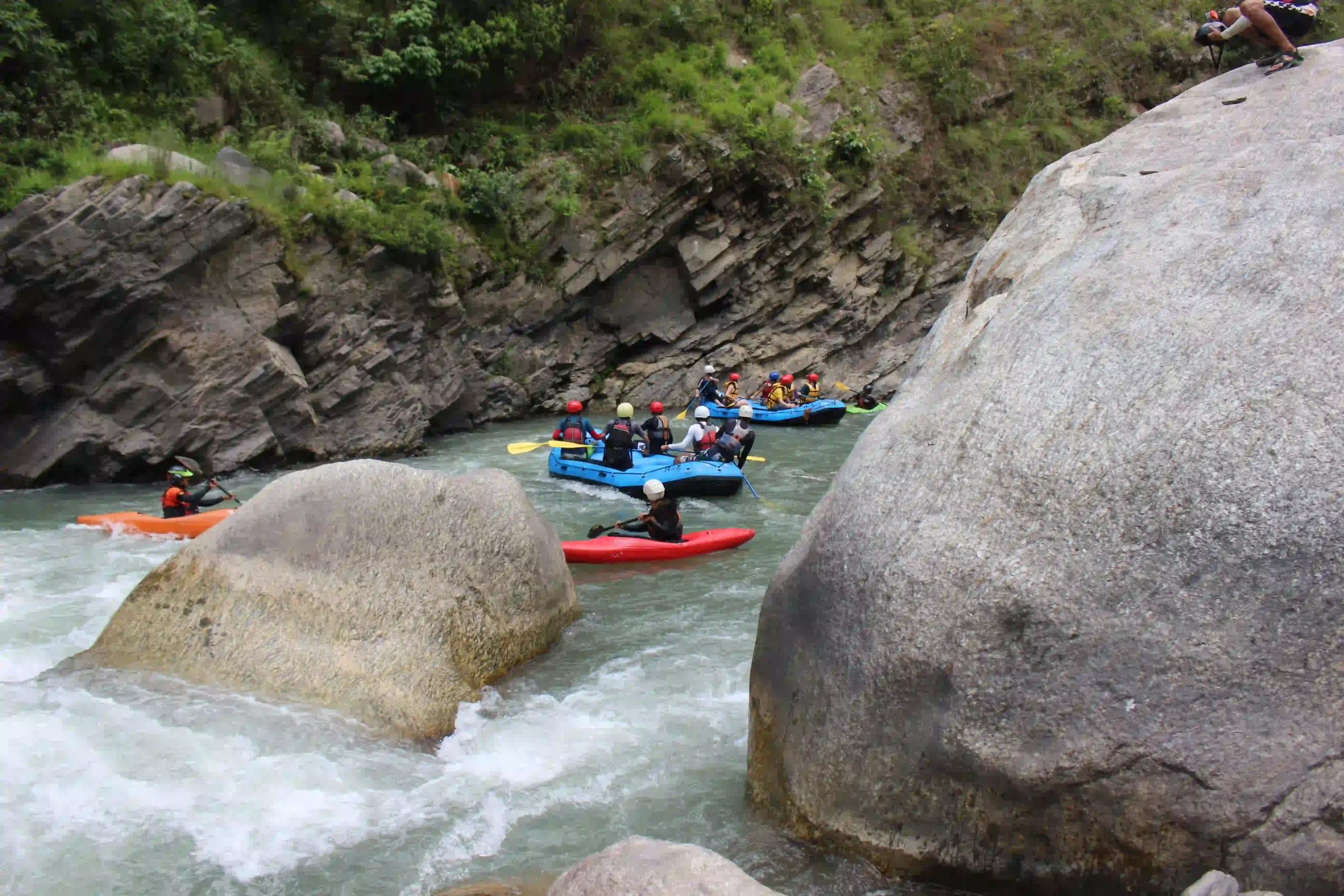
You will paddle the Lower Bhotekoshi’s Class III wave trains and pool-and-drop rapids, including Anil Top. The river runs through scenic gorges. The pools give you time to reset between rapids. Guides may point out safe spots for optional body surfing or a supervised cliff jump where conditions allow. In the evening, enjoy tea, coffee, and snacks at camp. There will be a briefing for Day 2, then a beach campfire with a barbecue dinner under the stars at Sukute.

Day 2: Sukute to Balephi, Kayak the Balephi Khola, Return to Kathmandu

Have breakfast at camp around 8:00 AM. Then take an off-road drive to Jalbire, the Balephi put-in. The drive takes about 1.5 hours and can be bumpy. Once in Jalbire, you will take part in a full safety briefing that covers the technical demands of the day. Then you launch on the Balephi Khola.

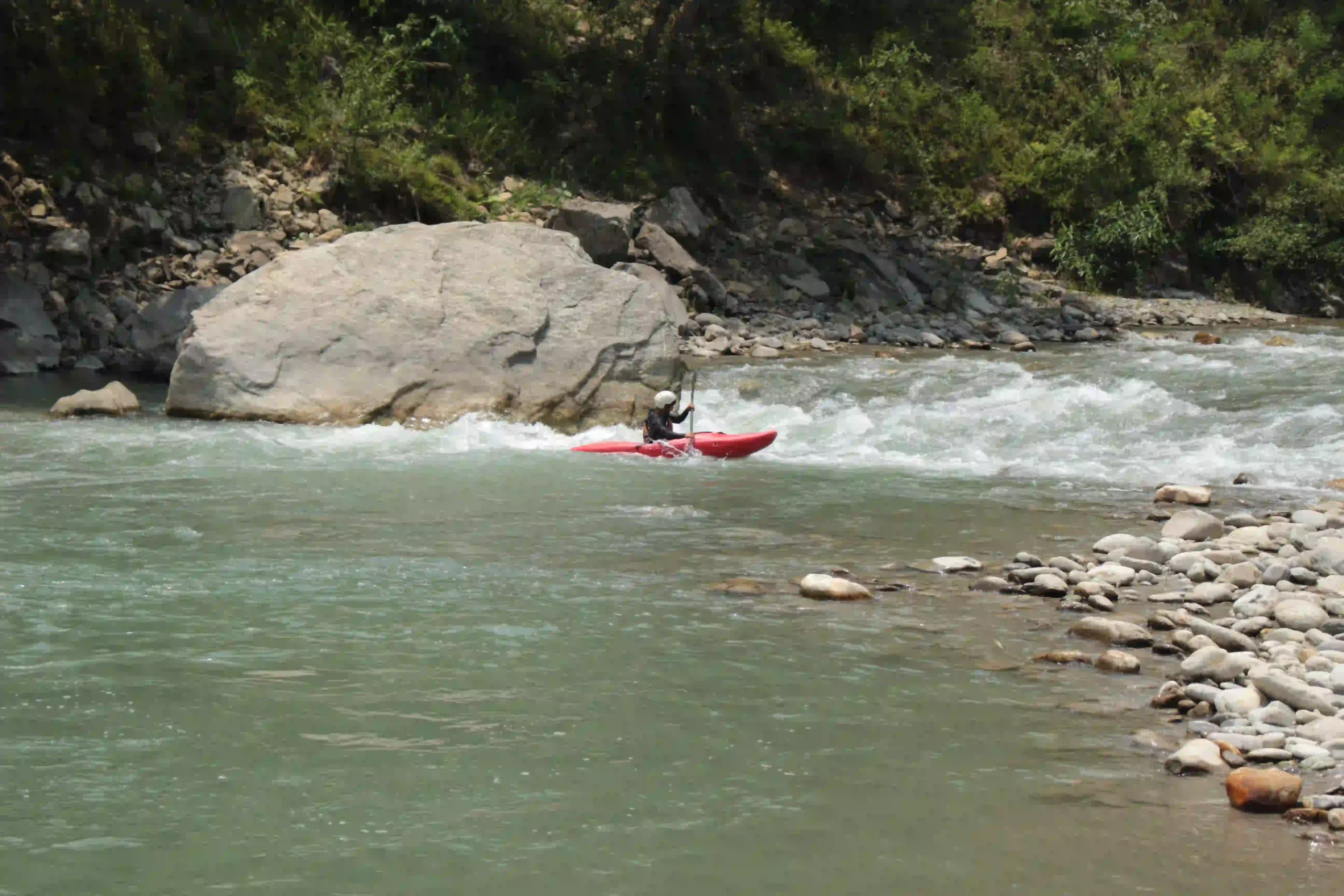
The Balephi is narrower and more technical. You will paddle continuous Class III to Class III+ rapids through tight boulder gardens. This is precision paddling. You will make quick turns, sharp reads, and confident moves through terrain that does not forgive a sloppy line.

You will pass villages, forests, and terraced farmland along the way while kayaking. You’ll stop for a riverside picnic lunch midway through. After lunch, you will paddle another 1.5 hours of rapids before the drive back to Kathmandu. The return drive to Kathmandu takes about 3 hours.

Note: Both rivers respond quickly to seasonal water levels. The Balephi is especially sensitive. We monitor conditions before every departure. We may adjust the exact section run if levels are too high or too low to paddle safely.

What Should You Bring for Kayaking and Camping?

On-water gear:

  • Secure river footwear with heel straps (Tevas, Chacos, or old sneakers). Flip-flops and loose sandals are not safe.
  • Quick-drying synthetic layers (polyester, nylon, spandex). Avoid cotton.
  • Waterproof sunscreen
  • Sunglasses with a floating retention strap

Camp gear for the night at Sukute:

  • A dry change of clothes for the evening (t-shirt, shorts or trousers, dry socks and underwear)
  • Small towel
  • Personal toiletries
  • Headlamp or flashlight for camp after dark
  • Dry sandals or flip-flops for the beach camp
  • A little cash for the tea or coffee stop on the way (self-pay)

Note: Leave jewelry, expensive watches, and unsecured electronics at home or locked in your dry bag at camp. If you swim, you can lose loose items.

What Is Included?

  • Professional English-speaking, licensed guides trained and certified in Whitewater River Guiding, Swift Water Rescue, and Wilderness First Aid
  • Professionally trained and certified safety kayakers
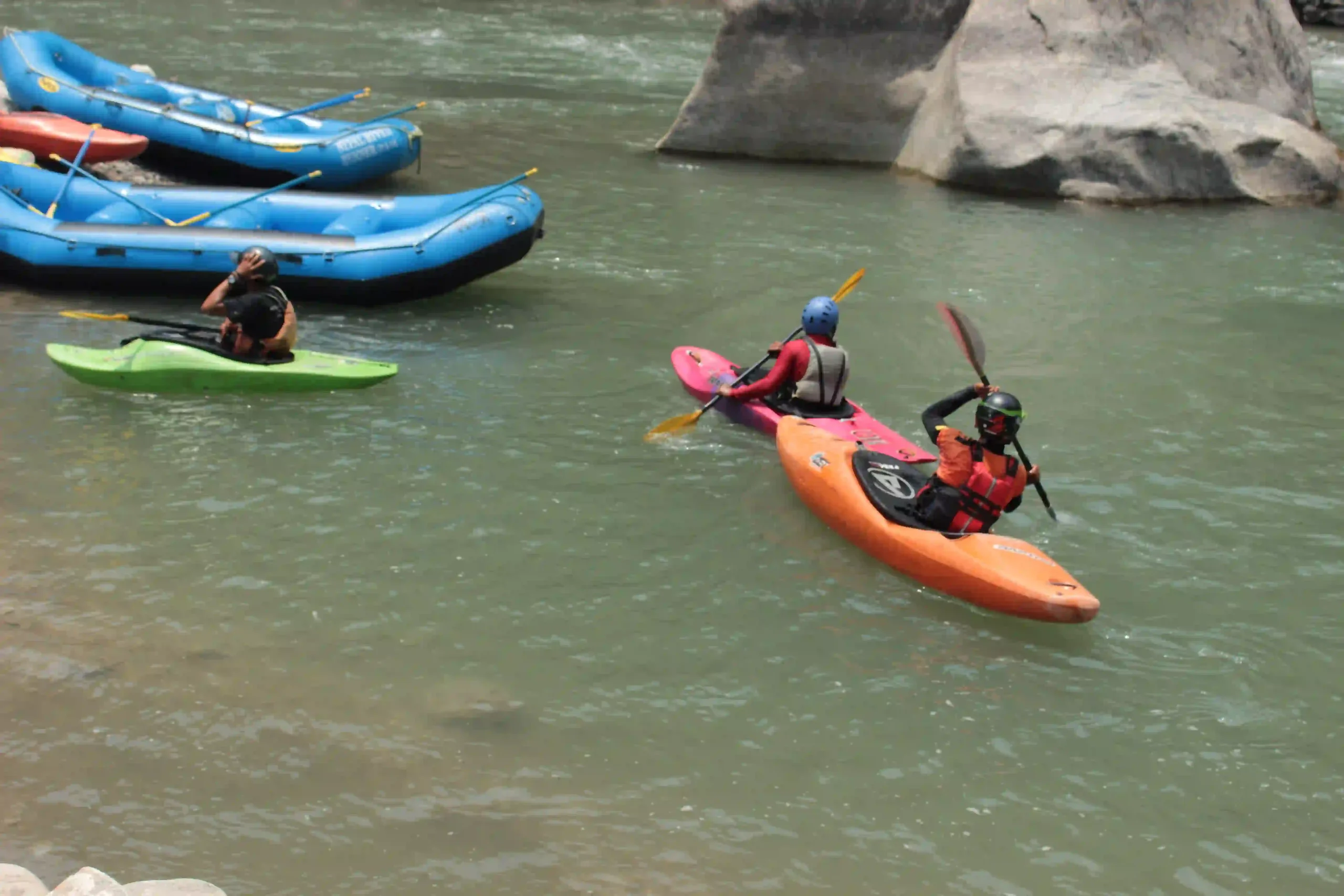
  • Kayaking equipment: whitewater kayak (fleet or hired-in, fully included), helmet, paddle, PFD, spraydeck, dry bags
  • Camp accommodation at Sukute: two-person tents, shelters, simple mattresses, sleeping bags, and toilet tents
  • Treated drinking water
  • Two-way transportation from Kathmandu
  • River permits
  • Industry-standard first aid kits
  • Team photos and video
  • Meals: Day 1 = Lunch and Dinner, Day 2 = Breakfast and Lunch

What’s Not Included

  • Visas, flights, and other taxes
  • Personal items (toiletries, clothing, camera, etc.)
  • Alcohol and packaged snacks
  • Travel insurance (paddlers must have their own policy)
  • Tips for guides (optional)
  • Tea or coffee stop on the way at Jiro-Kilo or Keraghari (self-pay)

Bhotekoshi vs Balephi: Which River Is More Technical?

The Balephi River is more technical. The Lower Bhotekoshi has wider channels, bigger pools, and gives you more time to recover between rapids. In contrast, the Balephi is narrower, faster, and full of tight boulder gardens that demand quick turns, precise boat placement, and constant edge contro

River Difficulty River style Main skill focus
Lower Bhotekoshi Class III Pool-and-drop rapids and wave trains Line reading, confidence, recovery
Balephi River Class III+ Boulder gardens and technical rapids Quick turns, edge control, precise boat placement

In short, the Bhotekoshi helps you build confidence and rhythm. The Balephi then tests that skill in a tighter, more technical setting.

Is This 2 Days Bhotekoshi and Balephi Kayaking the Right Trip for You?

This 2-day combination sits between a gentler single-day introduction and Nepal’s longer, more demanding kayaking expeditions. It’s a good choice if you want genuine technical progression over a weekend without committing to a multi-day expedition.

That said, this 2-day Bhotekoshi and Balephi kayaking trip is suitable for intermediate paddlers who want to sharpen their skills as much as they want a fun weekend on the river. The trip also works well as preparation for bigger expedition rivers (Sun Koshi, Tamur, or our full Multi River Kayaking Expedition).

However, if you’re looking for a shorter and gentler introduction, our Lower Bhotekoshi day trip covers the pool-and-drop Class III water in a single day. If you’re ready for something longer and bigger, our Sun Koshi Kayaking Expedition (10 days, Class III–IV+) and Multi River Kayaking Expedition (13 days, four rivers) are natural next steps once your roll and technical control are well established.

What Skills Do You Need for Balephi and Bhotekoshi Kayaking Trip?

You do not need expedition experience for this trip. However, you need a reliable roll in moving water and confidence on Class III rapids.

This trip suits you if you can:

  • Paddle Class III rapids with control
  • Read basic river lines
  • Roll your kayak in moving water
  • Make quick turns around rocks
  • Paddle actively for 2 to 3 hours a day
  • Follow guide and safety kayaker instructions

The technical nature of the Balephi’s boulder fields means the minimum age is 14, and participants under 18 need parental or guardian consent.

Best Time for Bhotekoshi Balephi Kayaking in Nepal

Autumn (late September to November) and Spring (March to May) are the best times for Bhotekoshi and Balephi Kayaking.

  • Autumn (late September to November): It’s the peak season. Post-monsoon flows are strong on both rivers. Weather is stable. Visibility is excellent. Sukute beach camping is at its best.
  • Spring (March to May): Snowmelt feeds the rivers with steady flow. This is often the best window for precise, technical paddling. Early spring can run low, and the Balephi can become rockier.
  • Monsoon (June to August): We do not run commercial trips during monsoon. Heavy rain can cause sudden water-level spikes and strong currents.
  • Deep winter (December to January): Possible on select dates. Water is cold. The Balephi often runs too low for clean boulder garden lines without extra portaging.

Note: No operator can promise an exact water level for a given month. We check conditions before each departure and choose the safest and most paddleable section.

Bhotekoshi and Balephi River Difficulty

This Bhotekoshi and Balephi River kayaking trip is rated Class III to Class III+ for a kayak descent. It is moderate and genuinely built for a two-day progression rather than starting hard and staying hard. Day 1 on the Lower Bhotekoshi is forgiving pool-and-drop water with recovery time between rapids. This helps you settle into your boat.

Day 2 on the Balephi is more demanding. The challenge is not bigger water, but tighter technical requirements. You need quick turns, precise boat placement, and continuous read-and-react paddling through boulder gardens. In a kayak, this step-up matters more than in a raft. There is no crew to correct a bad line. Your roll, edge control, and river read decide your outcome.

Choosing the Right Kayak for This Trip

Even though this is a shorter, more accessible trip, the boat still matters, especially on the Balephi’s technical sections.

A creekboat works well for this route. Its higher volume and rocker help with recovery and control through tight, technical boulder gardens without requiring a big-water hull. Paddlers with strong technique who want more active edge control for the Balephi’s quick turns can also consider a half-slice. Our fleet includes boats such as the Dagger Nomad, Pyranha, Jackson Karma, and Bliss-Stick Mystic, along with other models depending on availability. A suitable kayak from our fleet or, if your size or preferred model isn’t available in-house, one hired from a partner outfitter is included in the trip price, with no separate rental charge.

If you already know what you paddle at home, tell us the model and size. If you’re unsure, send us your height, weight, inseam, shoe size, whitewater experience, and roll experience, and we’ll recommend a suitable boat from the available fleet.

Why Choose a Small Group Kayaking Trip?

At Nepal River Runner, group size in the kayaking runs ranges from 1 to 14 paddlers. This is a deliberate choice. In a kayak, you make every line choice yourself. A smaller group means your safety kayakers and guides can watch each paddler through Balephi’s technical sections, not just the group as a whole.

Also, if you are joining solo, you can still join. This trip runs with a minimum of one paddler. You do not need to build your own group to book.

FAQs for Bhotekoshi and Balephi Kayaking

You will improve line reading and recovery on Day 1. On Day 2, you will work on precise turns, edge control, and continuous technical decision-making in boulder gardens. The two days build on each other.

Yes, we provide all needed kayaking equipment. The price includes a kayak, helmet, paddle, PFD, and spraydeck. If you want to bring your own boat, tell us the model and size when you book.

You need a reasonable level of fitness. Expect 2 to 3 hours of active paddling per day and some uneven terrain around camp. This trip is not suitable for pregnant travelers or people with serious back, shoulder, or heart conditions.

Absolutely, a solo traveler can join. Group size runs from 1 to 14. Thus, you do not need to bring your own group to book this trip.

It is required. You must show a reliable roll in moving water and comfortable Class III boat control. The Balephi’s boulder gardens do not give much room to recover from a missed roll.