
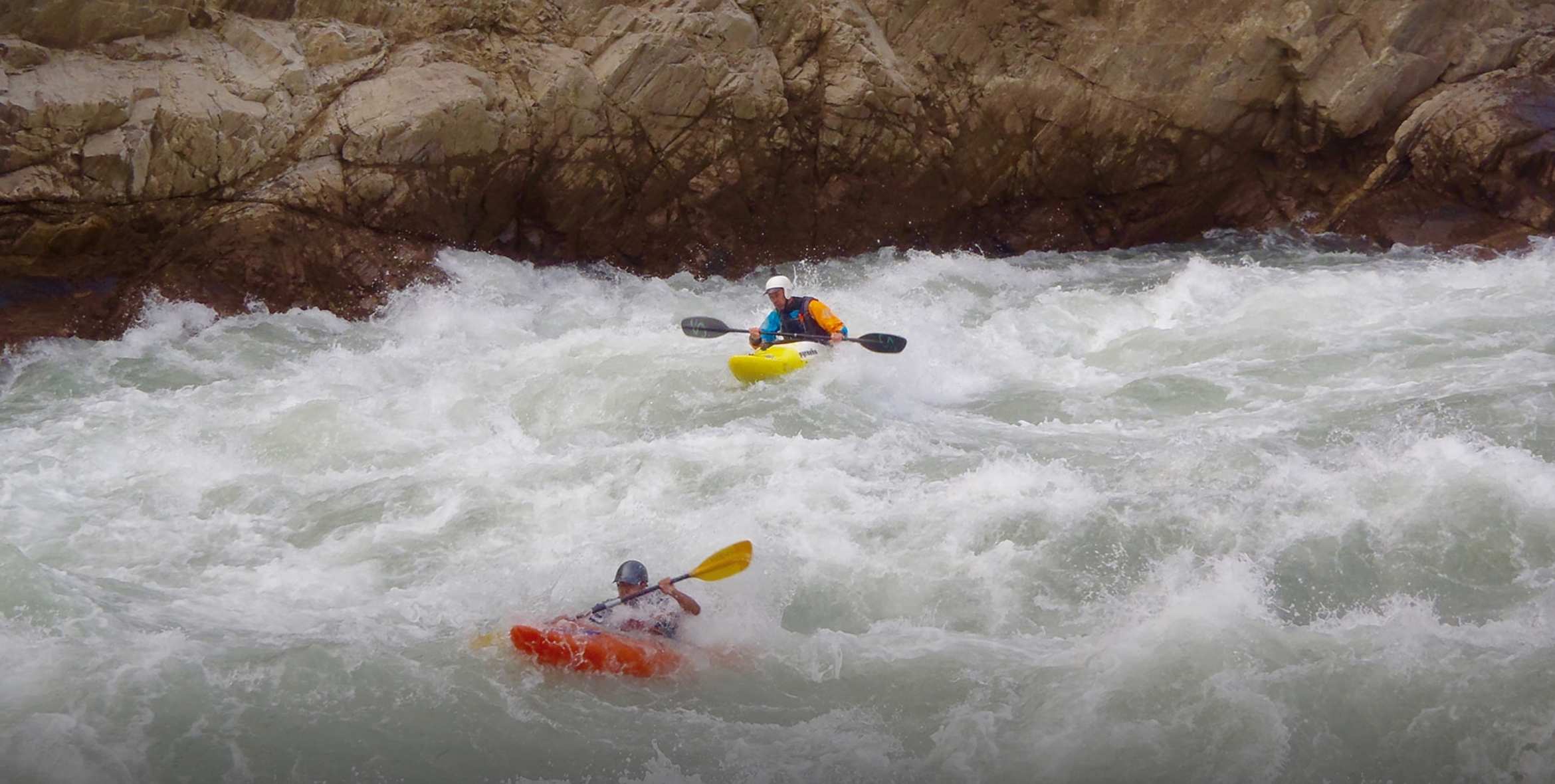


Sun Koshi River Kayaking Overview
Sun Koshi River Kayaking is a multi-day whitewater expedition through eastern Nepal, following the river from near Sukute towards Chatara. Known as the “River of Gold,”em> the Sun Koshi offers a mix of technical rapids, long stretches of moving water, and riverside camping. As tributaries join the main river, its volume and character change, giving paddlers a varied descent through forested valleys, terraced hillsides, and remote riverside settlements.
Some sections let you settle into a steady paddling rhythm, while others demand careful line choices, good boat control, and quick decisions. The route includes rapids such as Meat Grinder, Harkapur II, and Rhino Rock, though conditions can change with water levels and seasonal floods. Safety kayakers accompany the group, while a support raft carries much of the camping gear, food, and supplies. Each day ends at a riverside camp, away from the road and close to the river.
The standard itinerary takes 10 days, including eight days on the river and time in Kathmandu. The advertised route covers approximately 270 km, with daily distances and water conditions varying along the way. This expedition is best suited to experienced kayakers with solid Class III boat control, a reliable roll in moving water, and the fitness to handle several consecutive days of paddling. Guides may adjust the itinerary when river conditions require it.
What Makes the Sun Koshi Kayaking Expedition Unique?
- A multi-day descent along the Sun Koshi, with a changing mix of technical rapids and calmer stretches of moving water.
- Well-known rapids such as Meat Grinder, Harkapur II, and Rhino Rock, depending on current river conditions.
- Riverside camping on sandy beaches, with the support crew setting up tents and preparing meals each evening.
- Views of forested hills, steep valley walls, terraced farmland, and small riverside settlements along sections that are difficult to reach by road.
- Certified safety kayakers on the water and a support raft carrying camping gear, food, and other expedition supplies.
- Changing river conditions shaped by seasonal floods and shifting rocks, with guides adjusting the route and approach when necessary.


