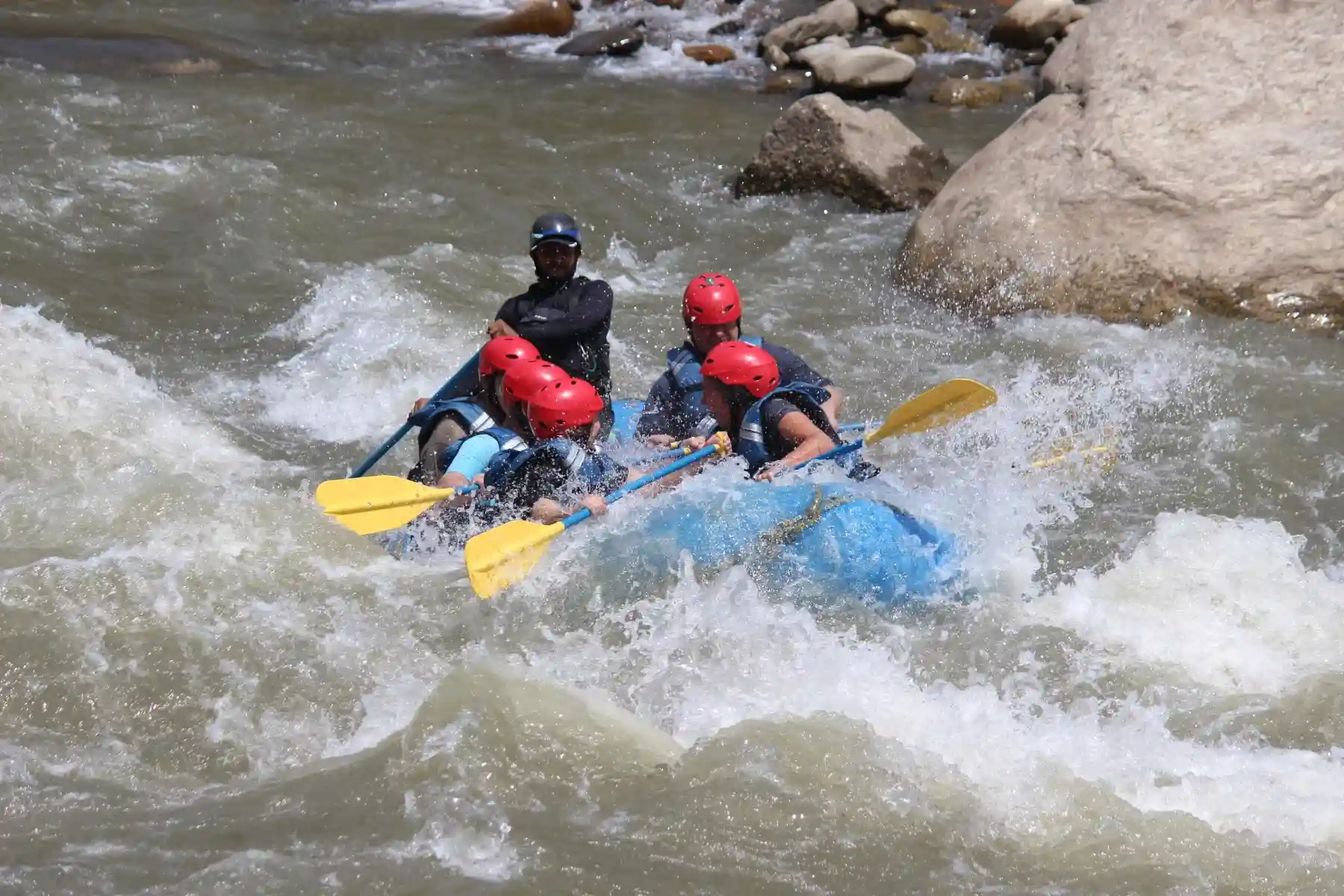
Bhotekoshi River Rafting

Starting Point

Starting Point Khadichaur (741 m)

Duration

Duration 1 Day

Difficulty

Difficulty Class III–III+ (Intermediate)

Activity

Activity White Water Rafting

Max. altitude

Max. altitude 741 m (River Section)

Best Season

Best Season March–June, September–November

Distance

Distance Approximately 13 km

Group Size

Group Size Minimum 1, Maximum 50

Ending Point

Ending Point Sukute Beach (698 m)

Why You’ll Love Bhotekoshi River Rafting

  • A concise, action-packed 1-day itinerary tailored perfectly for busy professionals.
  • Fast-paced, continuous Class III whitewater, tight boulder-garden maneuvering, and quick, bouncy rapids.
  • Very accessible, just a scenic 3-hour drive east of Kathmandu.
  • Scenic float through a wide river valley surrounded by traditional terraced fields and rural villages.
  • An exhilarating 2.5-hour river run featuring consistent, big-volume Class III / III+ wave trains.

Bhotekoshi River Rafting Overview

Bhotekoshi River rafting is one of Nepal’s most popular one-day whitewater trips. The river originates from the melting snows of the Zhangzangbo Glacier in Tibet (maximum source altitude: 8,012 m). While its upper canyons feature some of the steepest, wildest commercial whitewater in Nepal, our 1-day trip runs the lower section. This offers a thrilling yet manageable start for most people with a reasonable level of fitness. If you’re short on time but want a true whitewater adventure, this is the best choice you can make.

The lower Bhotekoshi delivers continuous, fast-paced Class III rapids with a gradient of 4 to 5 meters per kilometer, creating an exciting ride without requiring previous rafting experience. Kayakers, however, should have solid intermediate whitewater skills and a reliable roll.

At Nepal River Runner, we have operated Bhotekoshi rafting and kayaking trips since 2011. Our years of experience shape every trip we run, with a strong focus on safety, professionalism, and helping you make the most of your day on the river.

Bhotekoshi River Rafting Itinerary

Day 1: Drive from Kathmandu to Bhotekoshi and Return to Kathmandu

Your Bhotekoshi River rafting adventure begins at 6:30 am from our office in Thamel, Kathmandu. We will drive to Khadichaur (741 m), which takes around 3 hours. After about 1.5 hours, we will stop at Keraghaari Organic Coffee and Lassi Shop for a 20-minute tea and coffee break (self-pay). We will then continue for another 1.5 hours to reach Khadichaur, the rafting starting point. Once there, we will spend around 30 minutes preparing the rafting equipment.

If you have not completed your pre-departure form, you must do so before the trip begins. We will then conduct a 20-minute safety briefing before heading onto the river. During the rafting trip, your guides will let you know where you can swim or try cliff jumping if conditions are suitable. After finishing the river run, we will arrive at our beachfront base in Sukute, where a freshly prepared hot or cold buffet lunch will be served.

We will leave for Kathmandu at 5:00 pm, and the trip ends at our office in Thamel, where the journey began.

Important Information

  • Departure: Thamel, Kathmandu
  • Departure Time: 6:30 am
  • Return Details: Thamel, Kathmandu

Cancellation Policy

  • Please note that if you cancel your trip after booking, you will lose 30% of the trip amount.
  • The cancellation date will be the day we receive your written cancellation request.
  • If you leave a trip voluntarily for any reason once the journey commences, you will not receive a refund.
  • Nepal River Runner will not make any refunds for unused facilities/services such as transport, sightseeing, accommodation, meals, or other services.

What to Bring During this 1 Day Trip

  • Shorts or ½ pants
  • Sports sandals
  • Quick-drying shirts
  • Swimsuit
  • Warm layers (fleece and trousers)
  • Towel
  • Toiletries
  • Sunscreen, lip balm, and UV-protection sunglasses (with a retaining strap)
  • Camera
  • Water bottle
  • A little cash

What’s Included

  • Professional English-speaking licensed guides, highly trained and safety certified to international standards in Whitewater River Guiding, Swift Water Rescue, and Wilderness First Aid
  • Professionally trained and certified safety kayakers
  • Quality rafting and kayaking equipment, including boats, kayaks, helmets, paddles, PFDs, dry bags, and Pelican boxes
  • Treated drinking water
  • Two-way transportation
  • River permits
  • Industry standard first aid kits
  • Team photos (photos and videos by our team)
  • Included meals: Lunch/Hot Lunch

Types of food provided:

We provide purified drinking water and a comprehensive cold or hot buffet lunch at our beachside facility.

Sample menu for the trip:

  • Cold Lunch: Bread, Cheese, Salami, Tuna, Sardines, Baked beans, Salads, Fresh fruits, and Biscuits
  • Hot Lunch: Traditional Nepali Dal bhat set with both veg and non-veg options.

What’s Not Included

  • Visas, flights, other taxes, etc.
  • Personal items such as toiletries, clothing, and a camera.
  • Alcohol and other packaged foods.
  • Insurance policy: Paddlers need to have their own insurance, as we only provide insurance for our crew.
  • Tips for guides – we pay our guides and porters fairly, but if you want, you can tip them personally.

Bhotekoshi River Rafting Map

Close
Find Nearby Share Location Get Directions Close

How to prepare for Bhotekoshi Rafting?

Physical and mental preparedness

You must be adequately prepared before beginning your Bhotekoshi rafting journey. Keeping yourself physically active with mild exercises like cardio or jogging can help make you physically capable for the trip. Likewise, you must learn about the rafting features, challenges, etc., for mental preparation. When we talk about mental and physical preparedness, you cannot leave out the fact that you should be very confident.

Get all the gear necessary from your side

Rafters must prepare all the necessary gear and equipment for their rafting trip. While most essential gear will be made available through us, you need to tick everything in the checklist we’ve provided below. In addition to this, you should not neglect the importance of wearing safety gear like helmets and life jackets, as they will protect you in the most unimaginable situations and will also create a sense of security as you enjoy the journey. Also, make sure to follow your guide’s instructions throughout your trip!

Learn to hold the paddle properly

Be sure to hold the paddle properly. You can get a brief introduction about the paddles and how to keep them to ensure safety and comfort throughout the journey. Rafters will be given pre rafting guidance that will help them know how to hold the shaft correctly, position the blade, and paddle together with your rafting group. Following the tips with attention will help you avoid any kind of accidents or injuries.

Don’t drink and raft

Be careful about not drinking and rafting. Keep in mind that these two activities don’t go together. In fact, even a sip may cause you to become tipsy and fall into something unfortunate along the way. When you drink and raft, chances are, you may trip or fall off the raft, or even worse, meet with an accident in some way. There is also an increased possibility of delayed responses to what your instructor says after having been drunk.

Why Bhote Koshi should be on the Bucket List for Rafting?

The Bhotekoshi River is one of Nepal’s most popular short-duration rafting destinations. It flows into the Sun Koshi and forms part of the wider Sapta Koshi river system. Fed by Tibetan glaciers, the river brings true Himalayan energy into a single-day rafting experience, making it a great choice for those who want thrilling rapids without committing to a multi-day expedition.

Located about a 3-hour drive east of Kathmandu along the Araniko Highway, Bhotekoshi is easily accessible for a quick adventure. The upper canyons once featured steep Class IV to V rapids, but this section is currently not operated due to flood debris and riverbed hazards. The commercial rafting route now runs through the Lower Bhotekoshi from Khadichaur to Sukute, offering continuous Class III/III+ rapids and a 4 to 5 meter per kilometer gradient for an exciting, splash-filled ride.

Bhotekoshi River Rafting Difficulty Level

Whitewater rivers are graded on an international scale from Class I (easy, calm water) to Class VI (extreme and not commercially raftable). The difficulty of the Bhotekoshi depends on the section of the river you are rafting.

Lower Bhotekoshi (Khadichaur to Sukute)

  • Difficulty: Class III / III+
  • Gradient: 4 to 5 meters per kilometer
  • Character: Continuous wave trains, bouncy channels, and open recovery pools between rapids
  • Best for: Active beginners, first-time paddlers, youth groups, and families looking for an exciting day trip

Upper Bhotekoshi Gorge (Near the Tibet Border)

  • Difficulty: Class IV / IV+ (Class V during high water)
  • Gradient: Approximately 15 meters per kilometer
  • Character: Steep drops, technical sections, tight boulder channels, and powerful chutes
  • Best for: Experienced paddlers and intermediate rafters with previous Class III/IV experience

Unlike the steep and demanding upper gorge, the Lower Bhotekoshi offers continuous excitement with wider channels and calmer pools between rapids. It delivers a thrilling ride while still being manageable for most active participants.

Realistic Expectations: Physical Effort and Thrill Factor

Physical Demand: Moderate. You do not need advanced fitness or previous rafting experience, but you should be ready for active paddling, following guide commands, and staying engaged throughout the 2 to 2.5 hours on the river.

Thrill Factor: High. Expect a wet and energetic ride with cold Himalayan water, splashy waves, and continuous action. The rapids come in quick succession, keeping the whole team involved from start to finish.

Safety and Support: Every raft is led by an experienced guide, with proper safety equipment and trained support staff to help balance adventure with a safe rafting experience.

Understanding international river grading is essential before stepping into a raft. Whitewater rivers are categorized on a scale from Class I (easy, flat water) to Class VI (extreme, commercially non-raftable hazards).

Note on the Upper Bhotekoshi: Seasonal landslides, flash floods, and unstable slopes near the Tibet border have created debris and safety hazards in the upper gorge, making it currently unavailable for commercial rafting. All commercial trips operate on the Lower Bhotekoshi, below the affected area, providing high-energy Class III/III+ rafting with proper safety measures.

Who Is This Trip Suitable For?

The Lower Bhotekoshi rafting trip is suitable for a wide range of adventure seekers, from first-time rafters to experienced paddlers. Its Class III/III+ rapids, combined with calmer recovery pools, offer an exciting yet manageable one-day river experience.

  • Active Beginners and First-Timers: No previous rafting experience is required. Certified guides handle the technical aspects, while participants only need to feel comfortable in moving water, follow instructions, and be ready for an active paddle-filled adventure.
  • Intermediate Rafters: Those who have previously rafted Class II or III rivers (such as the Trishuli) and want more continuous action will enjoy the faster pace and stronger rapids of the Bhotekoshi.
  • Experienced Paddlers and Rafters: Experienced rafters and intermediate whitewater kayakers can enjoy the river’s continuous flow and technical features without committing to a multi-day expedition.
  • Groups, Friends, and Corporate Teams: Bhotekoshi rafting is also a popular choice for university groups, corporate outings, and weekend trips from Kathmandu. Working together through rapids makes it a fun team-building experience.

Age and Fitness Guidelines

  • Minimum age: 10 years, with a parent or guardian. (The narrower Balephi section requires a minimum age of 15.)
  • Fitness: Basic active fitness is recommended. Participants should have enough mobility and upper-body strength to paddle and brace themselves in the raft.
  • Swimming ability: Non-swimmers can join under normal river conditions with proper safety equipment, including life jackets, helmets, and safety kayakers. However, comfort in moving water is recommended.

Shorter Bhotekoshi Option for Domestic Groups

We also offer a shorter rafting section from Baluwa to Sukute, covering around 6 km in 1.5 to 2 hours. This budget-friendly option is popular among domestic groups and first-time local rafters due to its shorter duration and easy logistics.

Why International Travelers Love Bhotekoshi River Rafting

For adventure travelers visiting Nepal, the Lower Bhotekoshi River offers the perfect balance of accessibility, excitement, and Himalayan scenery. Unlike longer rafting expeditions such as the Sunkoshi or Karnali, which require several days and longer travel commitments, Bhotekoshi delivers an authentic Himalayan whitewater experience in a single-day adventure.

Its location near Kathmandu, continuous rapids, and professional rafting operations make it a popular choice for international visitors looking to add a thrilling outdoor activity to their Nepal itinerary.

High-Energy Whitewater in a Short Time

The Lower Bhotekoshi is known for its fast-paced river action and continuous rapids. From the moment you launch from Khadichaur, the river keeps you engaged with lively wave trains, quick channels, and exciting turns.

Unlike some rivers with long, calm sections between rapids, Bhotekoshi offers a more action-packed experience throughout the journey. This makes it ideal for travelers who want the excitement of Himalayan whitewater without committing to a multi-day expedition.

Easy Access from Kathmandu

One of Bhotekoshi’s biggest advantages is its convenient location. The river is located about 3 hours east of Kathmandu along the scenic Araniko Highway, making it one of the easiest whitewater destinations to reach from the capital.

Travelers can leave Kathmandu in the morning, enjoy a full day of rafting surrounded by hills and river landscapes, and return to the city by evening. This makes it a great option for those with limited time or a packed travel schedule.

Professional Guides and Reliable Safety Standards

International travelers value Bhotekoshi not only for its exciting rapids but also for the quality of rafting operations available on the river. Experienced guides, proper safety equipment, and trained support teams help create a secure and enjoyable experience for both beginners and experienced rafters.

The combination of thrilling water conditions and professional guidance allows visitors to experience Nepal’s rivers with confidence.

A Perfect Adventure Between Longer Trips

Many travelers visiting Nepal have busy itineraries that include trekking, sightseeing, or cultural experiences. A 1-day Bhotekoshi rafting trip fits easily between longer adventures such as the Langtang, Everest, or Annapurna treks.

It offers a refreshing change of pace, adding a dose of adventure without taking away several days from the rest of the journey. For travelers looking to experience Nepal beyond the trails, Bhotekoshi is an easy and rewarding addition.

Important Update on Upper Bhotekoshi River

While historical guidebooks often highlight the Upper Bhotekoshi (Tatopani / Chaku) for steep Class IV/V rafting, the upper canyon is currently closed to commercial rafting.

The upper river corridor is now utilized by major run-of-river hydropower facilities—most notably the Upper Bhote Koshi (45 MW) and Middle Bhotekoshi (102 MW) hydroelectric projects:
• Water Diversion: Concrete dams at Tatopani and Chaku divert river volume into underground headrace tunnels spanning over 10 km, leaving the natural upper bed de-watered or subject to sudden operational surges.
• Riverbed Obstructions: Monsoon floods have exposed pieces of rebar and created dangerous, jagged rocks. These obstructions make it extremely risky to navigate historic major rapids like Frog on the Blinder and Midnight Express.

Our current rafting route:

To guarantee absolute safety and consistent, natural river flow, Nepal River Runner operates all commercial 1-day trips exclusively on the Lower Bhotekoshi (Khadichaur to Sukute).

Located well downstream from hydropower diversion dams and landslide debris, this 13 km stretch flows naturally, delivering continuous Class III / III+ wave action, wide recovery pools, and classic features without any artificial interruptions or unrunnable hazards.
Note: We will reopen the Upper Bhotekoshi only when the river and surrounding slopes have been checked and confirmed safe.

Bhotekoshi River Rafting vs Trishuli River Rafting

Nepal offers several excellent whitewater rafting destinations, but Bhotekoshi and Trishuli are the two most popular choices for short rafting trips from Kathmandu. Both rivers provide exciting day adventures, but they offer very different experiences.

Bhotekoshi River rafting is known for its faster currents, continuous rapids, and more adventurous feel, making it ideal for travelers looking for an energetic Himalayan whitewater experience. On the other hand, Trishuli River rafting offers a more relaxed ride with calmer sections, swimming opportunities, and a gentler introduction to rafting.

The best choice depends on your preferred adventure level, travel group, and how much action you want on the river.

Feature Lower Bhotekoshi / Upper Sun Koshi (This Trip) Trishuli River Rafting
Difficulty Class III / III+ with continuous, fast-paced wave trains Class II+ / III with a classic pool-and-drop system
River Character Narrower valley, steeper gradient, and more active current Wider riverbed with larger calm pools between rapids
Location from Kathmandu Around 3 hours east toward the Tibet border Around 3 hours west on the route to Pokhara and Chitwan
Best For Active adventure seekers, first-timers wanting more action, and youth groups Families, corporate groups, and relaxed first-time rafters
Main Appeal Concentrated adrenaline with more continuous river action A gentler experience with more floating and swimming time

Choose Bhotekoshi if you want a more energetic ride with fewer breaks between rapids and a stronger whitewater experience. Choose Trishuli if you prefer a relaxed pace with more floating and swimming opportunities, making it a better choice for families and those trying rafting for the first time.

Best Season for Rafting on the Bhotekoshi River

Best Time for Bhotekoshi River Rafting

The best times for Bhotekoshi River rafting are autumn (September to November) and spring (March to June). Each season brings a different river experience, with changes in water volume, rapid intensity, weather conditions, and overall comfort.

Autumn (September to November)

Autumn offers some of the most exciting high-volume whitewater conditions on the Bhotekoshi. After the monsoon season, the river remains full and energetic, creating bigger waves and continuous rapids on the Lower Bhotekoshi.

With clear skies, warm weather, and excellent visibility, this season also provides beautiful Himalayan scenery during the drive from Kathmandu to the river.

Spring (March to June)

Spring brings clearer water and slightly lower river volume, creating a more technical rafting experience with visible channels, fun boulder sections, and crisp waves. Fed by snowmelt from the Tibetan Plateau, the river remains refreshing while offering warm weather and comfortable conditions.

The longer sunny days make spring an ideal time for a quick adventure from Kathmandu, with pleasant temperatures for rafting, swimming, and other river activities.

Winter (December to February)

It’s possible to do rafting in winter, but it is less popular due to colder temperatures. Water levels are generally lower and create clearer conditions and a more technical river experience. Sunny days can still make for enjoyable rafting, especially for travelers who prefer fewer crowds, but colder air and water temperatures make it less comfortable compared to spring and autumn.

Summer/Monsoon (July to August)

Commercial rafting on the Bhotekoshi is generally closed during the peak monsoon season. Heavy rainfall can cause sudden flood surges, increased water flow, and high sediment levels, creating unsafe conditions for commercial rafting operations.

FAQs About Bhotekoshi River Rafting

The Bhotekoshi River is famous for its exciting short whitewater rafting experience, featuring continuous Class III/III+ rapids close to Kathmandu. The river is also known for adventure activities like bungee jumping and canyon swinging at The Last Resort near the Tibet border.

Yes. Nepal’s famous 160-meter bungee jump takes place over the Upper Bhotekoshi gorge at The Last Resort, located near the Tibet border. It is about 22 km upstream from the rafting starting point at Khadichaur. While our 1-day rafting trip covers the Lower Bhotekoshi only, many travelers combine bungee jumping and rafting into a longer adventure.

Bhotekoshi rafting features continuous Class III and occasional Class III+ rapids during standard seasons. With proper guidance from experienced rafting crews and by following safety instructions, the trip is considered suitable for active beginners and intermediate rafters.

The minimum age for the Lower Bhotekoshi (Khadichaur to Sukute) rafting trip is 10 years with a parent or guardian. More technical sections or tributary runs, such as Balephi, may require participants to be at least 15 years old.

No. Previous rafting experience is not required. Certified guides handle the technical aspects of the trip, while participants only need basic fitness and the ability to follow paddle commands.

Yes. The Lower Bhotekoshi is a great option for active first-time rafters who want an exciting river experience. The Class III/III+ rapids provide plenty of action, while calmer sections between rapids help make the trip manageable with professional guidance.

The Bhotekoshi River offers a high-energy rafting experience with continuous rapids, beautiful Himalayan surroundings, and easy access from Kathmandu. Its 4 to 5 meter per kilometer gradient creates exciting wave trains while recovery pools provide a balanced experience, making it a popular one-day adventure in Nepal.