Everything You Need to Know About Bhotekoshi River Rafting
Whether you are stepping into a raft for the first time or comparing Nepal’s top whitewater rivers, this guide breaks down everything required to plan your trip. Draining glacial melt from Tibet's Zhangzangbo Glacier, the Bhotekoshi delivers continuous, splash-heavy whitewater just a scenic 3-hour drive east of Kathmandu.
While the river’s upper canyons are famous for extreme drops, commercial 1-day trips run on the highly thrilling, manageable Lower Bhotekoshi (Khadichaur to Sukute). This guide covers real river difficulty, seasonal water levels, safety standards, and what to expect on the water.
What Makes Bhotekoshi River Rafting Special?
Originating from the melting snows of the Zhangzangbo Glacier (8,012 m) in Tibet, the Bhotekoshi feeds directly into the Sun Koshi as part of the Sapta Koshi system. It is world-famous as one of the finest single-day whitewater runs on earth.
Continuous Class III Waves on a 7 m/km Gradient
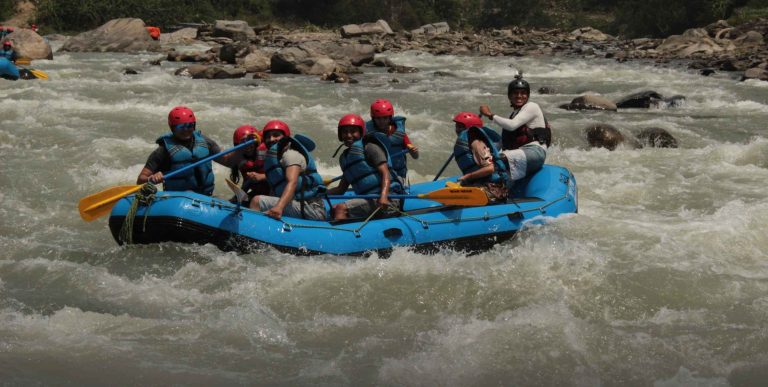
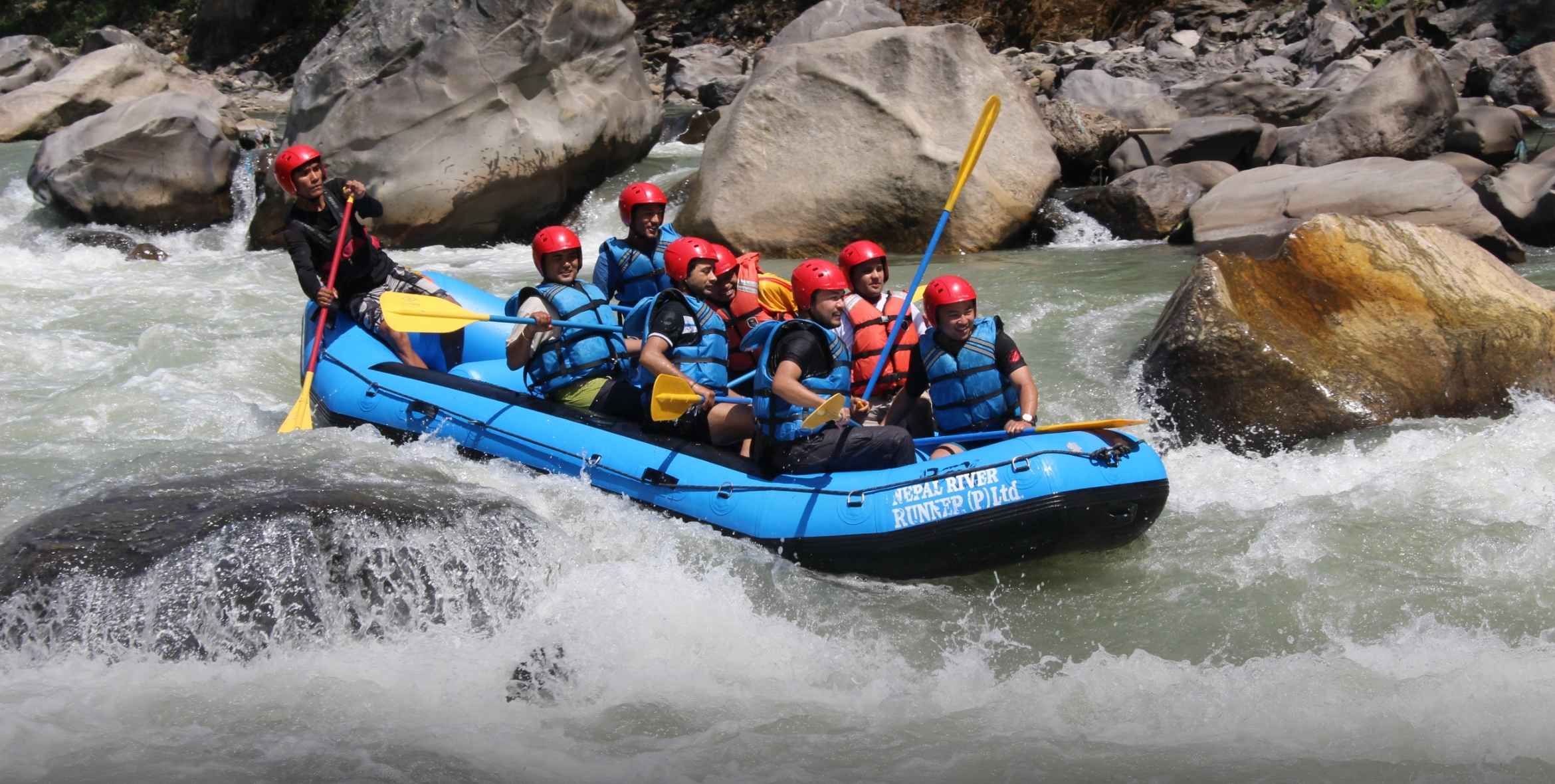
While the extreme upper canyon near the Tibet border features steep drops, our commercial 1-day run accesses the Lower Bhotekoshi. Here, the river maintains an accessible gradient of 7 meters per kilometer. This delivers fast-paced, continuous Class III / III+ wave trains that keep you paddling continuously, balanced by wide, forgiving recovery pools.
That steep gradient separates Bhotekoshi from Nepal's other popular rafting rivers. While the Trishuli spreads its rapids over a longer, gentler course, Bhotekoshi delivers continuous whitewater through a short, narrow gorge with very few calm sections between rapids.
Concentrated Action Close to Kathmandu
Located just a scenic 3-hour drive east of Kathmandu along the Araniko Highway, the trip avoids long, exhausting road transfers. You leave Thamel at 6:30 AM, complete 2.5 hours of action-packed rafting, enjoy a beachside buffet lunch at Sukute Beach, and return to Kathmandu by evening.

Where is the Bhotekoshi River?
The Bhotekoshi flows through Sindhupalchok District in northeastern Nepal, roughly 95 km northeast of Kathmandu. The primary 1-day commercial rafting run takes place on the Lower Bhotekoshi corridor:
- Put-in Point (Start): Khadichaur (741 m)
- Take-out Point (End): Sukute Beach (650 m)
- River Run Distance: ~13 km of continuous Class III / III+ whitewater
- Driving Time: ~3 hours each way from Thamel, Kathmandu via the Araniko Highway
The drive itself is part of the experience, winding through terraced hillsides, traditional villages, and deep river valleys before reaching the rafting starting point. Its close proximity to Kathmandu makes Bhotekoshi a popular choice for both day trips and overnight rafting adventures.
Is Bhotekoshi River Rafting Right for You?
The Lower Bhotekoshi balances bouncy wave trains with forgiving recovery pools, making it one of Nepal’s most versatile 1-day adventures.
Age Guidelines: Minimum age is 10 years old for the Lower Bhotekoshi run when accompanied by a parent or guardian. (Note: Technical tributary runs like the Balephi maintain a 15+ age limit).
First-Time Rafters & Active Beginners: Highly Suitable. You do not need prior rafting experience. Certified lead guides steer the raft from the stern and direct all paddle calls, supported by safety kayakers. You only need basic physical fitness and comfort in moving water.
Intermediate Rafters & Thrill-Seekers: Ideal Match. If you have rafted gentler rivers like the Trishuli and want a faster pace with less flat floating downtime, this run delivers the exact step up in energy you want.
Suitable For
- Experienced adventure seekers - Ideal for those looking for continuous, technical whitewater in a short, action-packed trip.
- Solo travelers - Most operators run mixed groups, so you can join without bringing your own group.
- Groups of friends or families - Suitable for groups, provided all participants meet the minimum age and fitness requirements.
- Corporate teams - Its short duration, teamwork, and exciting rapids make it a popular choice for team-building outings from Kathmandu.
Not Recommended For
- People with certain medical conditions - Those with heart conditions, recent surgeries, serious back or joint injuries, or other medical concerns should consult both their doctor and the rafting operator before booking.
Why International Travelers Love Bhotekoshi
For international travelers visiting Nepal, time is often stretched between multi-week Himalayan treks and cultural tours. The Lower Bhotekoshi (Khadichaur to Sukute) has become one of the most popular river destinations in the country because it packs genuine Himalayan river volume into an efficient 1-day itinerary.
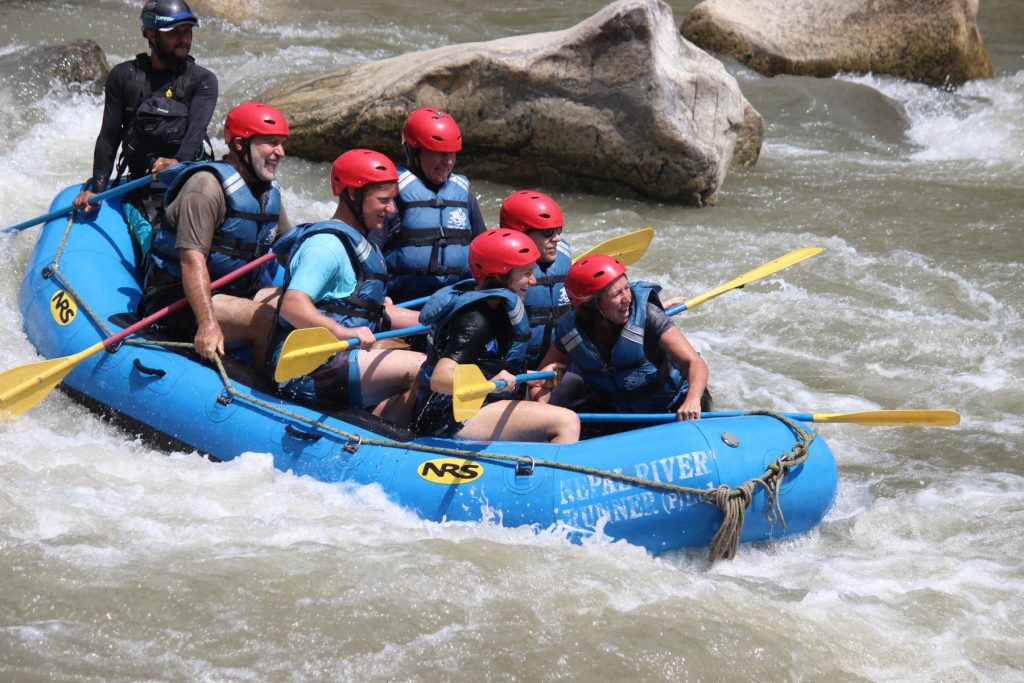
Accessible Entry Point for Bouncy Whitewater: Because an experienced guide handles all stern steering, active travelers and families with children aged 10 and older can safely experience real glacial meltwater rapids without needing prior paddling experience.
Maximum Whitewater in Minimum Time: Unlike multi-day river expeditions (such as the Sun Koshi or Karnali) that require a week-long commitment, the Lower Bhotekoshi delivers 2.5 hours of continuous Class III / III+ wave action and bouncy features like Bhaise Rapid in just a single day.
Seamless Integration with Trekking Itineraries: Located just 3 hours east of Kathmandu along the Araniko Highway, it serves as an ideal active rest day or pre-/post-trek adrenaline buffer for travelers returning from the Langtang Valley, Helambu, or Everest regions.
Easy 2-Day Adventure Combos: The Bhotekoshi valley is Nepal’s premier adventure hub. Located roughly 22 km (a 50-minute drive) upstream from our Khadichaur put-in is the famous 160-meter bungee jump and canyon swing over the upper gorge. International travelers can easily combine a morning jump with an overnight beach stay at Sukute and a day of rafting.
World-Class Safety Standards: International paddlers value rigorous swiftwater safety. Nepal River Runner runs every commercial trip with internationally certified lead guides, high-flotation PFDs, dry-land safety orientations, and dedicated safety kayakers flanking the raft throughout the entire run.
Operational Update: Status of the Upper Bhotekoshi & Hydropower Dams
While the Upper Bhotekoshi was historically famous as one of Nepal’s steepest whitewater runs, the upper gorge is permanently closed to commercial rafting.
The upper river corridor is now the site of major run-of-river hydropower infrastructure—most notably the Upper Bhote Koshi (45 MW) and Middle Bhotekoshi (102 MW) hydroelectric projects.
- Water Diversion & Unpredictable Flows: Diversion dams at Tatopani and Chaku route river volume into underground headrace tunnels spanning over 10 km. This leaves long stretches of the upper canyon de-watered during lower flows and subject to sudden water releases during power generation.
- Artificial Riverbed Hazards: Concrete intake structures, spillways, and construction debris create unrunnable siphons and hazards that compromise commercial passenger safety.
- Our Operational Focus: To guarantee absolute client safety and consistent, natural river flow, Nepal River Runner concentrates all commercial 1-day operations on the Lower Bhotekoshi (Khadichaur to Sukute).

Upper vs. Lower Bhotekoshi Quick Comparison
| Operational Feature | Upper Bhotekoshi (Non-Operable) | Lower Bhotekoshi (NRR Commercial Run) |
| Section Range | Tatopani / Chaku to Barhabise | Khadichaur (741 m) to Sukute (650 m) |
| Primary Status | Inoperable (Hydropower Dams) | Active 1-Day Commercial Run |
| Hydropower Infrastructure | Upper (45 MW) & Middle (102 MW) Dams | None (Open, natural river channel) |
| River Gradient | ~15 to 20 m/km (Extremely steep) | 7 m/km (Continuous, manageable drops) |
| Difficulty Rating | Class IV – V (Extreme hazards) | Class III / III+ (Bouncy wave trains, e.g., Bhaise) |
| Water Flow | Artificially diverted into tunnels | Natural, continuous volume year-round |
| Minimum Age | N/A (Closed) | 10+ Years (With parent/guardian) |
Rapid Difficulty and Gorge Character
Rather than breaking the run into isolated named drops, the Lower Bhotekoshi is defined by continuous Gorge Class III+ whitewater. The river channels glacial volume into fast-paced wave trains and bouncy boulder slots.
| Rapid | Class | What to Expect |
|---|---|---|
| Gorge | III+ | Continuous, fast-flowing wave trains, bouncy roller waves, and swift current lines requiring active team paddling. |
| Recovery Pools | II / III | Wide, calm river pools situated below major wave sections, providing clear recovery zones for guides and safety kayakers. |
| Bhaise | II+ | A bouncy, high-volume wave train that serves as an immediate, fun warm-up to practice paddle commands and get splashed. |
Before launching, every trip begins with a comprehensive safety briefing. Your guide will explain paddle commands, proper paddling techniques, what to do if you fall into the water, and how to safely navigate the rapids. Each raft is led by a licensed guide, while safety kayakers accompany the group to assist if needed. Previous rafting experience isn't necessary, but listening carefully, following instructions, and working as a team are essential on a technical river like the Bhotekoshi.

Best Time for Bhotekoshi River Rafting
Bhotekoshi offers a different rafting experience in every season. Water levels, rapid intensity, and weather conditions change throughout the year, so the best time depends on your experience level and the kind of adventure you're after.
Spring (March-May)
- One of the best seasons for rafting.
- Moderate water levels create exciting yet manageable rapids.
- Warm temperatures and stable weather make it ideal for most travelers.
- Suitable for beginners and experienced rafters alike.
Summer/Monsoon (June-August)
- Water levels rise significantly, creating bigger, faster, and more powerful technical rapids.
- Best suited to experienced rafters seeking a more challenging adventure.
- Heavy rainfall can affect river conditions, and trips may be postponed or canceled for safety.
- While many budget outfitters close during peak monsoon due to flood surges, Nepal River Runner operates specialized Monsoon High-Water Rafting trips (July – August) subject to real-time water level inspections.
High-Water Safety Protocol: During the monsoon, river levels are monitored daily at the put-in. Trips only run when water gauge readings, clarity, and weather windows meet strict safety limits. Every high-water departure is led by senior swiftwater rescue-certified guides, flanked by dedicated safety kayakers, and supplied with high-flotation PFDs. Extreme flood stage surges result in immediate trip rescheduling.
Autumn (September-November)
- Considered the best all-around season for Bhotekoshi rafting.
- Clear skies, pleasant temperatures, and stable water levels provide excellent conditions.
- A great choice for first-time rafters and adventure enthusiasts alike.
Winter (December-February)
- The river remains raftable, but glacier-fed water makes conditions much colder.
- Lower water levels create slightly less powerful rapids.
- Fewer departures are available, making advance booking more important.
Best time to go: For most travelers, March to May and September to November offer the best combination of favorable weather, comfortable temperatures, and thrilling rafting conditions.
One-Day vs Multi-Day Bhotekoshi Rafting Trips
Bhotekoshi offers an unforgettable rafting trip to suit different schedules, be it one free day or an entire weekend. Here's what you can expect from each option.
One-Day Adventure
- 06:30 AM Departure: Meet at the NRR office in Thamel, Kathmandu, and depart in private tourist transport along the Araniko Highway.
- Keraghaari Refreshment Stop: After ~1.5 hours of driving, stop for a 20-minute tea/coffee break at Keraghaari Organic Coffee & Lassi Shop.
- Arrival at Khadichaur (741 m): Reach the river put-in by ~09:30 AM. Gear setup takes 30 minutes, followed by a mandatory 20-minute dry-land safety briefing on paddle commands ("Forward hard!", "Get down!"), PFD fittings, and swiftwater rescue.
- 2.5 Hours on the Water: Tackle continuous Class III / III+ rapids down to Sukute Beach, with designated spots for swimming and cliff jumping monitored by certified safety kayakers.
- Sukute Beach Take-Out (650 m) & Lunch: Change into dry clothes at NRR’s beachfront base and enjoy a freshly prepared buffet lunch (Cold lunch options like bread, cheese, salami, tuna, salads, and fruits, or a hot Nepali Dal Bhat set).
- Return to Kathmandu: Depart Sukute around 05:00 PM to arrive back in Thamel by 08:00 PM.
Overnight Packages
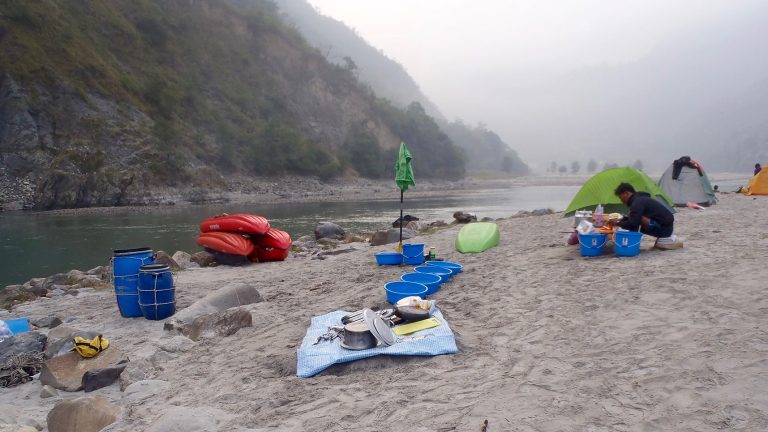
If you have more time, an overnight rafting package offers a more relaxed and immersive experience. After a day on the river, you'll spend the night at a riverside camp or resort, enjoying a bonfire, meals, and time to unwind before returning the next day. These trips are popular with groups of friends, corporate teams, and travelers looking to combine rafting with a memorable night by the river.
How Much Does Bhotekoshi River Rafting Cost?
The cost of Bhotekoshi River rafting varies depending on the operator, group size, trip duration, and what's included in the package. Since many operators offer customized pricing, prices vary. You have to compare what's included rather than just looking at the advertised cost.
The main factors that affect the price include:
- Group size: Larger groups usually pay less per person because transportation and guide costs are shared.
- Trip duration: Overnight packages cost more than one-day trips due to accommodation, additional meals, and extended guide support.
- Season: Prices may vary between peak and off-peak seasons depending on demand.
- Package inclusions: Some packages include transportation, meals, permits, rafting equipment, licensed guides, and safety kayakers, while others charge separately for these services.
For the latest pricing and package options, contact Nepal River Runner directly for a customized quote.
Bhotekoshi River rafting is one of Nepal's shortest adventures to plan, but one of the hardest to forget. With fast, continuous rapids, stunning Himalayan scenery, and easy access from Kathmandu, it's a favorite for thrill-seekers looking to pack maximum excitement into a single day.